Surfers, swimmers and ocean-loving communities across Australia are rallying behind a growing international movement calling for an immediate halt to deep sea mining, as environmental concerns mount over its potential impact on the world’s most vulnerable marine ecosystems.
On Sunday, 20 July, beaches around Australia will become focal points of a global Day of Action to Stop Deep Sea Mining. Spearheaded locally by Surfrider Foundation Australia and supported by coastal community groups, the coordinated demonstrations aim to send a unified message: “Stop deep sea mining before it starts.”
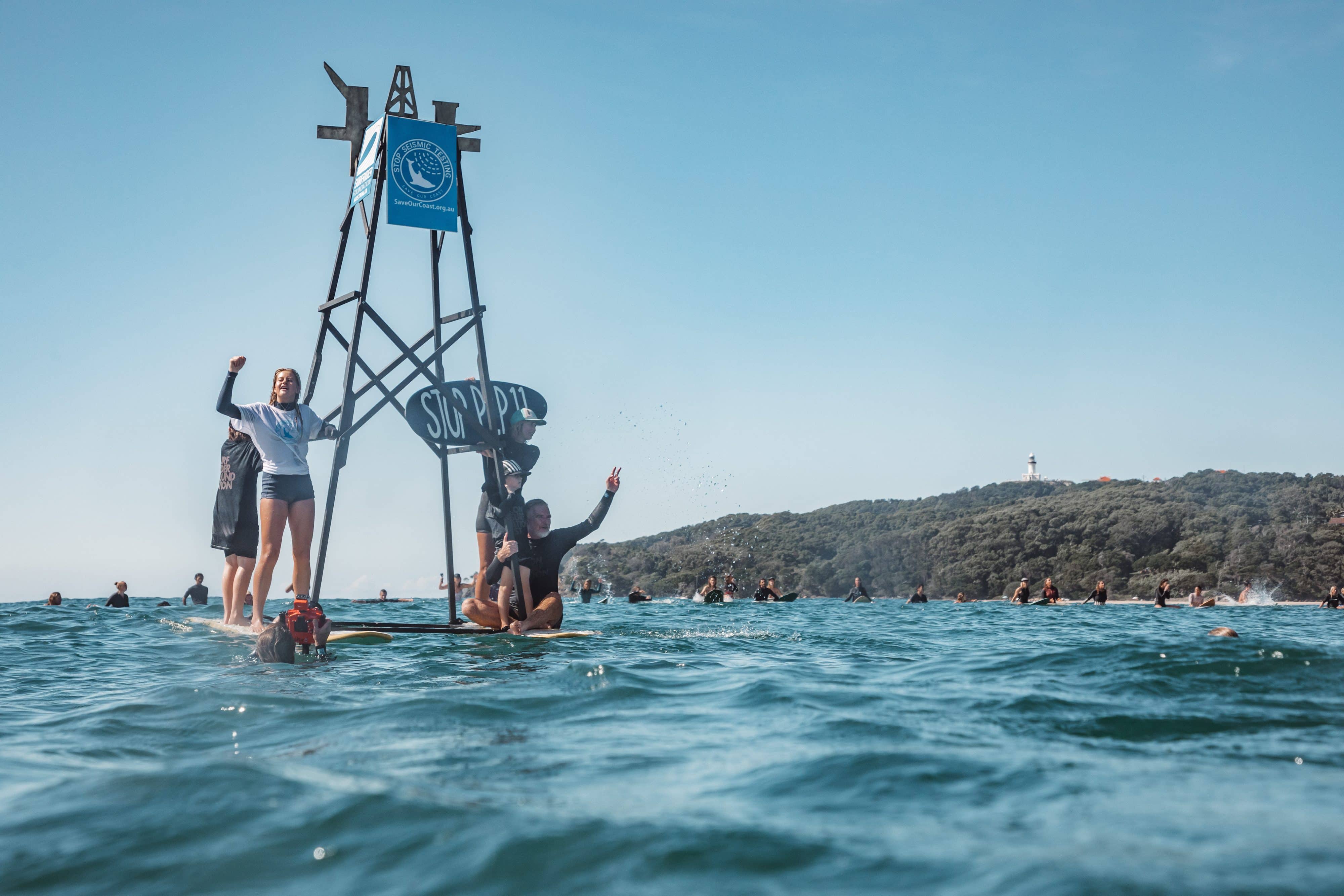
These peaceful, symbolic events will include paddle-outs at some of the country’s most iconic surf breaks, including a flagship gathering at Byron Bay’s Clarkes Beach at 12pm. The action coincides with critical negotiations underway at the International Seabed Authority (ISA) in Kingston, Jamaica, where from 7 to 25 July, global leaders will debate whether or not to open up international waters to industrial-scale seabed mining for the first time in history.
Deep sea mining, or seabed mineral extraction, involves deploying heavy machinery to strip mine the ocean floor at depths reaching 6,000 metres. The primary area under consideration is the Clarion Clipperton Zone (CCZ), an expansive region between Hawaii and Mexico, rich in polymetallic nodules—rocky deposits containing cobalt, copper, manganese and nickel. These materials are scattered across the deep Pacific seafloor and have attracted interest from mining companies looking to tap into the resource-rich territory.
However, scientists and conservation groups warn that the environmental risks of deep sea mining are profound and irreversible. The ocean floor in these regions hosts highly sensitive habitats and an extraordinary diversity of life, much of which remains undiscovered. It is estimated that 90% of species dwelling in these deep-sea ecosystems are yet to be identified or named.
Marine experts fear that any disruption to these habitats would trigger a cascade of ecological consequences. Mining operations would generate toxic sediment plumes, clouding the water column and interfering with the feeding and reproduction cycles of marine life. The constant industrial noise produced by machinery could disrupt the communication of whales and other marine mammals that rely on sound to navigate and survive.

Drew McPherson, National Campaigns Director for Surfrider Foundation Australia, emphasised the importance of protecting deep-sea environments as part of a broader commitment to ocean health.
“As surfers, we spend the majority of our time on the coast, surfing waves on sandbanks, points or reefs where the land meets the sea,” said McPherson. “But the deep sea is a critical part of a healthy ocean and is where swells (waves) are created and pass through.”
McPherson pointed to scientific warnings that biodiversity loss from deep sea mining would be unavoidable. “Extinctions would be inevitable—when the ocean is already so vulnerable to human exploration, we simply can’t afford to add to its exploitation by destructive deep-sea mining,” he said.
Currently, no commercial mining has begun, and momentum is building for a moratorium. A coalition of 37 countries has already voiced opposition, citing insufficient knowledge about deep sea ecosystems and the potentially devastating environmental consequences. Still, governments are under increasing pressure to give the green light to the nascent industry during the ISA meetings.
At the heart of the debate is the principle of the “global commons.” The deep sea, as part of international waters, is considered the common heritage of humankind. This means that all nations—and by extension, all people—have a stake in how these waters are used and protected.
“The interconnected health of our ocean is why Surfrider Foundation Australia is stepping up to raise awareness of this destructive practice,” McPherson said, “and the need to stand up and defend the deep.”
This month’s Day of Action offers Australians a chance to physically demonstrate that concern, with events designed to inspire reflection as well as activism. Participants are encouraged to gather at their favourite beach, bring friends, paddle out, and “take a deep moment for the deep sea.”
With the ISA poised to make decisions that could open the door to a new frontier of ocean exploitation, coastal communities are making their voices heard in defence of what they see as a shared and irreplaceable treasure. The global movement against deep sea mining is growing louder—and on 20 July, that message will rise from the waves.
Byron Bay, A Day for the Deep – Paddle Out
As part of the global Day of Action to Stop Deep Sea Mining, Surfrider Foundation Australia will host a flagship paddle-out at Clarkes Beach, Byron Bay on Saturday 20 July at 12pm.