
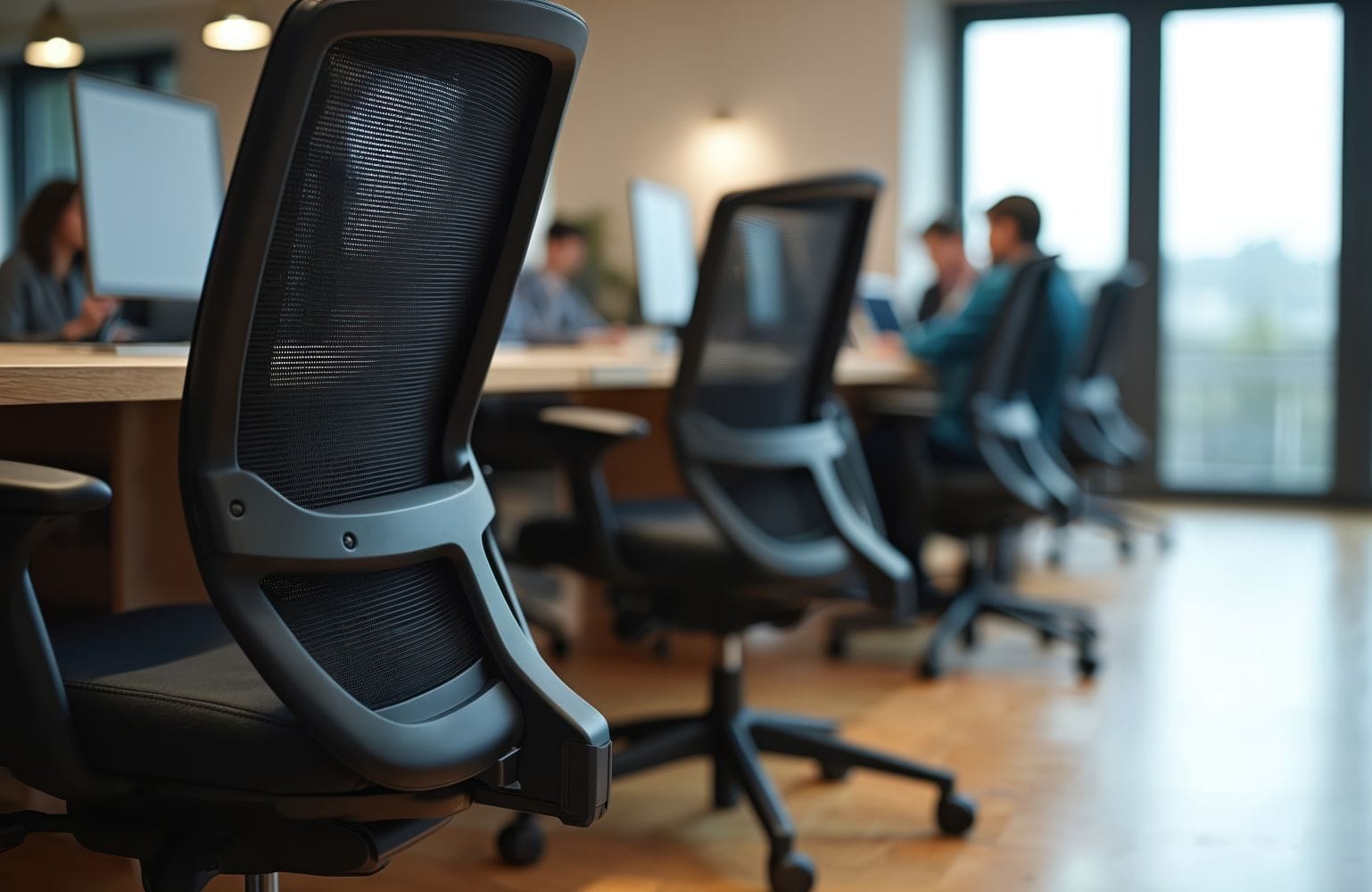
Today, the physical workspace is no longer viewed as a static backdrop for labour but as a dynamic tool for enhancing organisational performance. A significant shift has occurred, with progressive companies increasingly allocating budgets towards high-quality ergonomic office furniture. This strategic investment extends beyond mere aesthetics, representing a data-driven acknowledgment of the tangible benefits associated with employee well-being.
Here’s why more businesses are investing in ergonomic office furniture.
The Direct Correlation Between Ergonomics and Productivity
Productivity is the lifeblood of any enterprise, and ergonomic furniture serves as a direct catalyst for its improvement. Standard office chairs and desks typically force employees into postures that induce fatigue, discomfort, and distraction. Conversely, ergonomically designed office desk chairs with adjustable lumbar support, seat depth, and armrests can promote proper spinal alignment.
Sit-stand desks can empower individuals to alternate their working positions throughout the day, combating the well-documented hazards of prolonged sitting. This reduction in physical discomfort can help minimise micro-breaks employees take to stretch or alleviate pain, thereby maximising focused work time. When employees are physically supported, cognitive resources are freed from managing discomfort and can be fully directed towards task completion, problem-solving, and innovation. The result is a more engaged, efficient, and fluid workforce where output quality and quantity see measurable enhancement.
Lastly, the traditional, rigid office setup is being systematically replaced by designs that prioritise human physiology, leading to a cascade of benefits that impact productivity, financial health, and competitive advantage. This trend is particularly evident in major metropolitan hubs, where businesses seek tailored solutions. For instance, companies exploring premium commercial office furniture Melbourne or similar locations often find that specialised local providers offer the expertise necessary to implement these transformative changes effectively.
Mitigating Costs Associated with Workplace Injuries
From a financial perspective, investing in ergonomics is a powerful risk mitigation strategy. Musculoskeletal disorders (MSDs), such as chronic back pain, carpal tunnel syndrome, and neck strain, are among the most common work-related injuries. These conditions often stem from repetitive motions and poor posture facilitated by substandard furniture.
The costs associated with MSDs are substantial, encompassing direct expenses such as workers’ compensation claims, healthcare costs, and insurance premiums, as well as indirect costs including absenteeism, turnover, and retraining. Ergonomic interventions proactively address the root causes of these workplace injuries. A high-quality ergonomic chair or an appropriately positioned monitor arm can prevent the development of debilitating conditions.
Therefore, capital expenditure on ergonomic furniture is frequently offset by significant savings in healthcare and insurance costs, positioning it as a prudent long-term investment in the company’s financial stability.
Enhancing Employee Well-being and Talent Retention

In today’s competitive job market, talent acquisition and retention are paramount. The modern workforce, especially the younger generations, places a high value on employers who demonstrate a genuine concern for their health and well-being. Providing an ergonomic workstation is a visible and tangible expression of this care. It signals that the organisation views its employees as valuable assets worthy of investment, not merely as expendable resources. This fosters a culture of respect and appreciation, boosting morale and job satisfaction. Employees who feel cared for are more likely to be loyal, reducing costly turnover rates.
Furthermore, a reputation for a health-conscious workplace, underscored by a serious commitment to office ergonomics and health and safety, becomes a powerful recruitment tool. It attracts top-tier candidates who prioritize a supportive environment that actively mitigates risks like repetitive strain injuries through solutions such as a standing desk. The office itself becomes a statement of company values, aiding in building a dedicated and high-performing team.
Supporting the Evolution of Hybrid and Flexible Work Models
The widespread adoption of hybrid and flexible work models has further accelerated the need for ergonomic solutions. As employees split their time between corporate offices and home office environments, businesses face a new challenge: ensuring consistent ergonomic support across all work locations. Companies are now incentivised to provide ergonomic furniture in central offices and through stipends or direct provision for home offices. This ensures that productivity and health standards are maintained regardless of physical location, safeguarding the organisation from potential liabilities.
In the central office workstation, this shift necessitates more adaptable, hot-desking-friendly ergonomic solutions, including an ergonomically designed backrest and other workstation accessories that can be quickly personalised by any user. The focus has expanded from outfitting a single assigned desk to creating an entire ecosystem of supportive furniture that facilitates movement, collaboration, and individual focus within a dynamic floor plan.
The Long-Term Return on Investment
Viewing ergonomic furniture through the lens of short-term expense is a critical misstep. The true value is realised in the comprehensive return on investment (ROI) over time. This ROI is calculated based on reduced injury costs and the combination of sustained productivity gains, decreased absenteeism, lower employee turnover, and enhanced innovation. A healthier workforce is a more present and resilient one, leading to greater operational continuity.
The initial investment in quality pieces, which often boast greater durability than their non-ergonomic counterparts, amortises over many years of service. When businesses partner with experts who understand the science of workplace design, the implementation becomes strategic and impactful.
Final Thoughts
The strategic shift toward ergonomic office furniture underscores a fundamental business truth: investing in employee well-being yields measurable returns. By keeping the information mentioned above in mind, companies can unlock sustained productivity, foster loyalty, and secure a competitive edge. This evolution can transform the workspace from a cost centre into a vital asset for long-term organisational health and performance.