
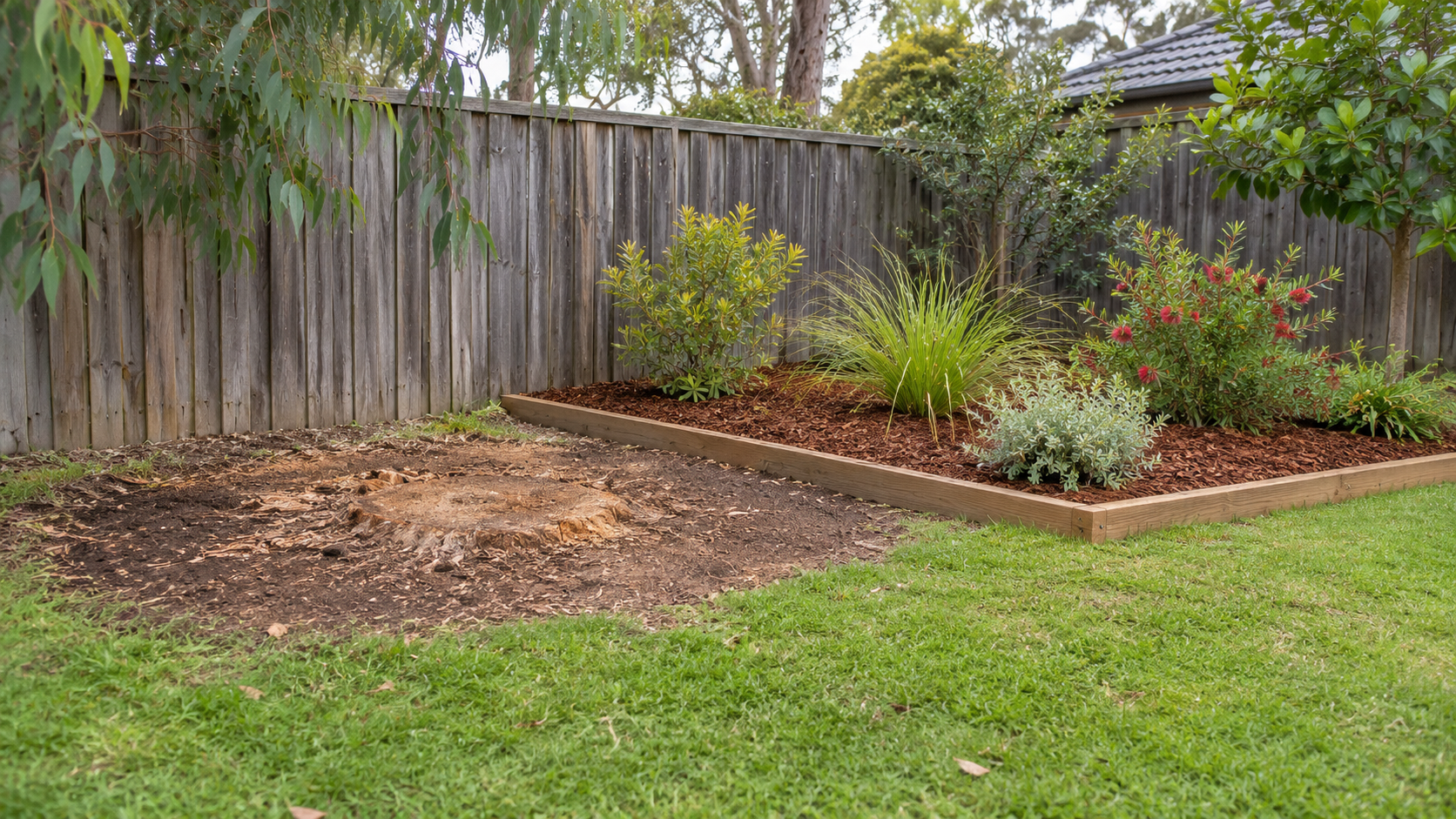
Every suburb has that one backyard with a stump sitting in the middle of it. The tree came down years ago, maybe in a storm or because the roots were heading for the sewer line, and the stump just stayed. Grass grows awkwardly around it, the mower clips it every fortnight, and the kids trip over it.
I get why people leave them. Once the tree is gone, the stump feels like a small problem. But it’s usually the one thing holding the rest of the yard back, and fixing it is far simpler than most people expect. Here’s how to go from stump to a garden worth spending time in, whether you’re in Melbourne, Sydney or anywhere in between.
Why That Stump Really Should Go
A stump isn’t just an eyesore. As it rots, it becomes a magnet for termites, ants, beetles and fungi, and those pests don’t always stay put. Surface roots can keep spreading too, lifting paths and pushing garden edges out of shape. Some species will even keep sending up suckers for years, as if the tree hasn’t quite accepted it’s gone.
It’s no surprise that expert stump removal in Melbourne is such a common search after a windy winter. Most homeowners only pick up the phone once the stump starts causing trouble, when sorting it early would have saved them the hassle.
The good news is that the job is quicker than it looks. A single stump typically takes a few hours. A professional crew will check for underground services, set up barriers, and leave the area level when they’re done. Tight spots behind fences or right up against paving are usually fine too, as long as the operator has compact gear.
Grinding or Full Removal?
There are two ways to deal with a stump. Full removal digs out the stump and the main root ball, which leaves a big hole and a lot of disturbed soil. Grinding uses a machine to chew the stump down below ground level, usually somewhere between 10 and 30 centimetres.
For most backyards, grinding is the better choice. It’s faster, tidier and far less disruptive to the surrounding lawn and garden beds. The grindings become wood chip mulch, which can go back into the hole or onto your garden beds, so very little needs to be carted away.
A few things decide the quote: the size of the stump, the type of timber, how far the roots spread and how easy it is to get a machine in. Hardwoods like gum take longer to grind than softer timbers, and a stump behind a narrow side gate needs smaller equipment. If you’ve got more than one stump, have them quoted together. One visit for three stumps usually works out far better than three separate call-outs.
Full removal still has its place. If you’re putting in a slab, a pool or footings right where the tree stood, ask whether the remaining roots need to come out as well. A good arborist will tell you honestly which option suits your plans.
Prepare the Soil Before You Plant
This is the step people skip, and it’s why so many patches of new turf over old stump holes end up yellow and patchy.
Fresh wood chip is great as a surface mulch. Mixed through the soil, though, it starts breaking down and borrows nitrogen from the ground while it does, so plants growing right on top can struggle for the first season. The fix is easy:
- Rake out most of the coarse grindings and save them for mulching beds elsewhere.
- Backfill the hole with good quality garden soil mixed with compost.
- Water it in and let it settle for a week or two, topping up any dips.
- Add a slow-release fertiliser before planting or laying turf.
If several old trees once stood on the block, it’s worth getting a soil test as well. Some sites have compacted or poorly drained ground that needs more than a quick top-up.
Decide What the Space Is For
Once the stump has gone, you’ve got a blank patch to work with, so take a minute to think about how you actually use the yard. A flat, sunny spot might suit a vegie patch or a few fruit trees in pots. A shady corner could become a fern garden or a gravel seating nook. If the old tree left a big gap in the lawn, new turf might be all it needs. And if low upkeep is the goal, paving or decking over the spot works well, as long as the grindings are cleared and the base is compacted properly.
This is also a good time to fix the things that bugged you before. Drainage problems, tired edges, a path that goes nowhere, a hedge that’s outgrown the fence. Plenty of professional gardening services Sydney wide can handle the whole lot in one go, from turf laying and paving to retaining walls and irrigation, which saves you juggling three different trades.
Whatever you choose, plant for your conditions rather than for the photo on the plant tag. Natives and hardy Mediterranean plants cope well with hot, dry summers in both Sydney and Melbourne, and they need far less water once established.
Keep It Looking Good Year Round
A new garden bed looks brilliant for about six weeks. After that, weeds move in, mulch thins out, and hedges start reaching for the gutters. The difference between a garden that thrives and one that slides backwards is regular attention.
If you’ve ever searched for reliable garden maintenance Sydney options in the middle of a humid February, you’ll know how quickly things get away from you in summer. A visit every few weeks for mowing, weeding, hedge trimming and green waste removal stays ahead of the growth before it turns into a weekend-long clean-up. Many gardeners offer one-off tidy-ups too, which come in handy before a sale or a party.
If you’d rather do it yourself, set a simple routine:
- Weed little and often, ideally after rain when roots pull out cleanly.
- Top up mulch to around 5 to 7 centimetres each spring.
- Trim hedges lightly and regularly instead of hacking them back once a year.
- Check irrigation lines and drippers at the start of summer.
Timing and Common Mistakes
Stump grinding can happen any time of year, but planting is a different story. Autumn and early spring are usually the sweet spot for new beds and turf, when the soil is warm enough for roots to establish and the weather isn’t too harsh.
A few mistakes come up again and again. People lay turf straight over fresh grindings and wonder why it fails. Others leave the grindings in a big pile on the lawn, which smothers the grass underneath within a couple of weeks. They plant new trees too close to fences, foundations or pipes, setting up the same problem for the next owner. And they forget about the roots of neighbouring trees, which can keep wandering into a new bed if nobody keeps an eye on them.
The other big one is simply waiting too long. A stump that’s been rotting for five years is a much bigger pest risk than one dealt with straight away.
From Eyesore to Favourite Spot
An old stump is one of those jobs that’s easy to put off, yet sorting it out often makes the biggest difference to how a backyard looks and feels. Grind it out, give the soil some care, choose plants that suit your conditions, and keep up with the basics.
Get those steps right and the patch you used to mow around could easily become your favourite spot in the garden.