
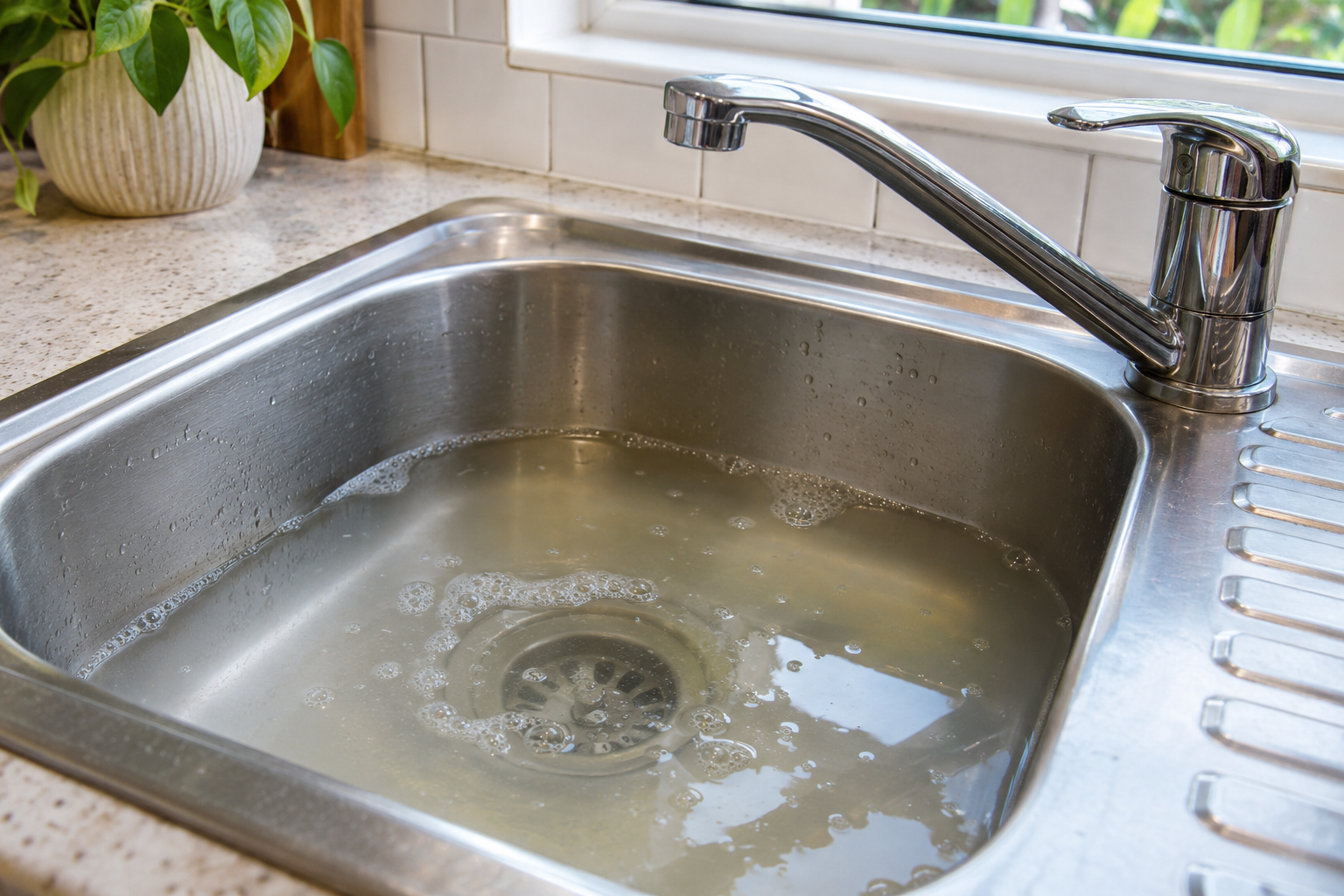
Most plumbing disasters don’t arrive out of nowhere. They whisper first. A sink that takes a little longer to empty, a toilet that gurgles after the shower runs, a faint smell near the laundry floor waste. It’s easy to shrug those things off when life is busy, and most of us do.
The trouble is that small warning signs are usually the cheapest point to fix a problem. Leave them long enough and a slow drain becomes an overflowing one, often on a Sunday night with guests on the way. Here’s how to read the signals, what you can safely handle yourself, and when it’s time to get help.
The Early Warning Signs Worth Taking Seriously
Some symptoms are easy to spot. Water pooling around the shower, a tap that won’t stop dripping, or a hot water system that runs cold halfway through your shower. Others are subtler and easier to ignore.
Keep an ear and an eye out for:
- Gurgling from plugholes or the toilet when another fixture drains.
- Water draining slowly from more than one fixture at once.
- Sewage smells inside or around the yard.
- Damp patches on walls or ceilings, or a water bill that suddenly jumps.
- Soggy lawn or lush green patches over the line of your sewer pipe.
One slow sink is usually a local clog. Several fixtures struggling together points to something further down the line, and that’s where guesswork gets expensive. For anything involving gas, hot water, hidden leaks or the main sewer line, it’s worth calling professional plumbers in Sydney who can diagnose the cause properly rather than treat the symptom. A good plumber will explain what they’ve found, give you a fixed price before starting, and leave you knowing what caused the problem in the first place.
Why Sydney Drains Block So Often
Sydney has a few things working against its drains. Many older homes, particularly in established suburbs, still have clay or terracotta sewer pipes. They were built to last, but the joints between sections are a weak point, and tree roots find them remarkably quickly. A tiny crack is all a fig or gum needs to send fine roots inside, where they grow into a dense mat that catches everything flowing past.
Our weather plays a part too. Heavy summer storms push leaves, soil and debris into stormwater drains, and a blocked stormwater pit can send water back towards the house. Long dry spells, on the other hand, encourage roots to chase moisture in the sewer line even harder.
Then there are everyday habits. Fat and oil poured down the kitchen sink cools and hardens on the pipe walls. Wipes labelled “flushable” don’t break down the way toilet paper does. Hair, soap scum and food scraps build up slowly until one day the water simply stops moving.
It also helps to know where your responsibility ends. In most cases, the pipes on your property are yours to maintain, while Sydney Water looks after the main sewer network. If a blockage sits close to the boundary, a camera inspection will show which side of the connection it’s on, and that can save you paying for a repair that isn’t yours.
What You Can Safely Try Yourself
For a single slow drain, a few simple steps often do the trick:
- Clear the plughole and remove any hair or debris you can see.
- Use a plunger, with enough water in the sink or basin to cover the rubber cup.
- Flush the drain with hot water from the tap rather than boiling water, which can soften PVC joints.
- Try a mix of bicarb soda and vinegar, left for half an hour before flushing with warm water.
Avoid harsh chemical drain cleaners. They rarely shift a serious blockage, they can damage older pipes, and they make the job unpleasant and unsafe for whoever has to work on the drain next.
If none of that works, or the blockage keeps coming back within a few weeks, stop there. Repeated plunging on a deeper blockage can push the problem further along the pipe, where it’s harder to reach and more likely to cause an overflow.
When It’s Time for a Specialist
Some blockages need proper equipment, and drains are a good example. A specialist blocked drain plumber will usually start with a CCTV camera inspection, feeding a small waterproof camera down the pipe to see exactly what’s causing the problem. That matters, because a root intrusion, a collapsed pipe and a build-up of fat all need different fixes.
Once the cause is clear, the usual options are:
- Electric eel. A rotating cable that cuts through roots and stubborn clogs.
- High-pressure water jetting. A powerful jet that scours the pipe walls clean of grease, silt and debris.
- Pipe relining. A no-dig repair that seals cracked or damaged pipes from the inside, without ripping up the driveway or garden.
- Section replacement. For pipes too far gone to reline, the damaged length is dug out and replaced.
Ask for a camera check after the clearing too. It confirms the pipe is genuinely clear and shows whether there’s any damage that could cause the same problem again in a few months.
Simple Habits That Prevent Blockages
Prevention is a lot cheaper than repairs, and most of it comes down to what goes into the pipes.
In the kitchen, wipe greasy pans with paper towel before washing them and keep a sink strainer in place. In the bathroom, use a hair catcher in the shower and keep a bin beside the toilet for wipes, cotton buds and sanitary products. Outside, clear leaves from gutters and stormwater grates before storm season, and think carefully before planting thirsty trees near the sewer line.
If your property has a history of root problems, scheduled drain cleaning once or twice a year can stop roots from taking hold again. Strata buildings and commercial kitchens in particular tend to benefit from a regular maintenance plan, since one blocked line can affect several units or bring a busy kitchen to a halt.
Choosing a Plumber You Can Trust
When something does go wrong, a little homework saves a lot of grief. A few things to check before anyone starts work:
- Licence. Every plumber doing work in NSW should hold a current licence, and you can check it through NSW Fair Trading.
- Upfront pricing. A fixed quote approved before work begins avoids surprise invoices.
- Insurance. Public liability cover protects you if something goes wrong on site.
- Clear explanations. A good plumber tells you what caused the problem and how to stop it happening again.
- Availability. Burst pipes and overflowing toilets don’t wait for business hours, so it helps to know who offers genuine 24/7 callouts.
It’s also worth saving a trusted number in your phone before you need it. Searching for help with water pooling across the bathroom floor is not the moment to compare reviews.
Listen to the Whispers
Your plumbing almost always gives you a warning before it fails. A gurgle, a smell, a sink that’s a bit slower than it used to be. Treat those signs early, keep the wrong things out of your drains, and call in the right help when the problem goes beyond a plunger.
Do that and you’ll spend far less time dealing with plumbing emergencies, and far more time forgetting your pipes exist, which is exactly how it should be.