
Today, there is an app for anything. You can use online medicine registries, you can use apps for learning or cooking, you can even use them for playing an instrument. Some of them are there to be useful, some are there to be convenient, and some are there for pure entertainment.
In the modern world of automation, it’s no surprise that there are apps for doctor appointment booking too. This modern approach makes medical care more approachable and effective. No longer do the patients need to wait in lines, call for hours, or commute to make a simple appointment. Convenient and not-so-time-consuming, healthcare apps have made a true revolution in the healthcare industry.
Technology and Healthcare
How are technology and healthcare actually connected? At first, when healthcare is concerned, technology’s role was to track fitness or send medication reminders. However, today, healthcare apps have evolved to a whole new level.
Medical apps we use today are there to detect conditions even before the first symptom manifests or to provide real-time monitoring even for vital signs.
The development of healthcare mobile apps has further accelerated this transformation. A huge number of relevant medical apps are available for downloading, and most people today have at least one they use regularly.
More Efficient Appointment Scheduling
The most irritating thing about making appointments is that it can take too much time. Traditionally, patients had to call a certain clinic during strict and limited office hours and to wait on hold to be met with a fully booked calendar in some cases.
On the other hand, online scheduling has made it possible to book an appointment with just a couple of clicks. Making an online dr appointment allows you to see available time slots, choose your doctor, and book appointments within seconds.
This situation benefits both clinics and patients. Healthcare providers reduce their administrative workload significantly and minimise scheduling errors this way.
Increased Convenience
Another important benefit of technology usage in healthcare is the increased convenience for patients. Firstly, you don’t have to wait for the appointed timeslot to make your appointment. Instead, you can use the app any time of day, considering they are available 24/7.
You can book, reschedule, and even cancel whenever you want to. This is particularly useful today, when we are all living busy and hectic lives. Furthermore, a lot of apps designed for this have other useful features such as constant reminders of your appointment, both for patients and for the clinics.
Better Access to Healthcare
Unfortunately, healthcare isn’t as accessible to everyone as we’d like. People who live in rural or underserved areas may have some difficulty reaching their doctors on time. With digital platforms, finding specialists becomes much easier.
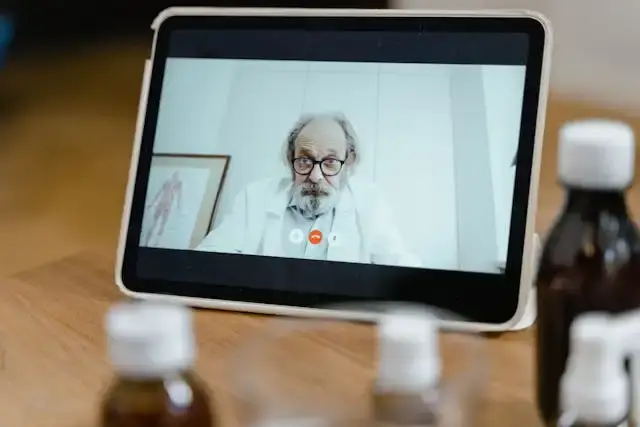
Not only that, but comparing various healthcare providers and scheduling virtual consultations becomes possible, too. This way, people don’t need to travel long distances for a simple health-related conversation.
Higher Transparency
Looking for a specialist might sometimes be overwhelming and tedious. On the other hand, the right app might simplify this process completely. With a healthcare app, you can see detailed information about clinics and doctors, as well as their specialties, availabilities, patient reviews, and insurance plans.
Having this kind of useful data displayed in such a way that benefits the patient increases transparency in healthcare. No longer is there a need to rely on referrals and guesswork when you can easily find a specialist who meets your needs.
The Future of Healthcare
The entire healthcare experience is getting more and more personalised and streamlined each year. With technological advancements, we can only expect this trend to continue. Artificial intelligence and predictive analytics are the two leading factors in this transformation.
The future of healthcare is expected to become more patient-friendly – with fewer phone calls, never-ending paperwork, and long waits. Technology is making healthcare more convenient, more accessible, and less stressful both for patients and for healthcare professionals.
Conclusion
The digital world has been significantly integrated with the real-world. For that very reason, we have an app for every part of human life. Some apps, though, are more useful than others. Healthcare apps, in particular, have proven themselves to be reliable, easy to use, and highly effective in improving patient experience and access to medical services in general.