
For decades, Australia’s major employment centres followed a familiar formula: live within commuting distance of a CBD, travel to the office five days a week and organise personal life around fixed working hours. That model has not disappeared, but it is no longer the only way Australians imagine a successful career.
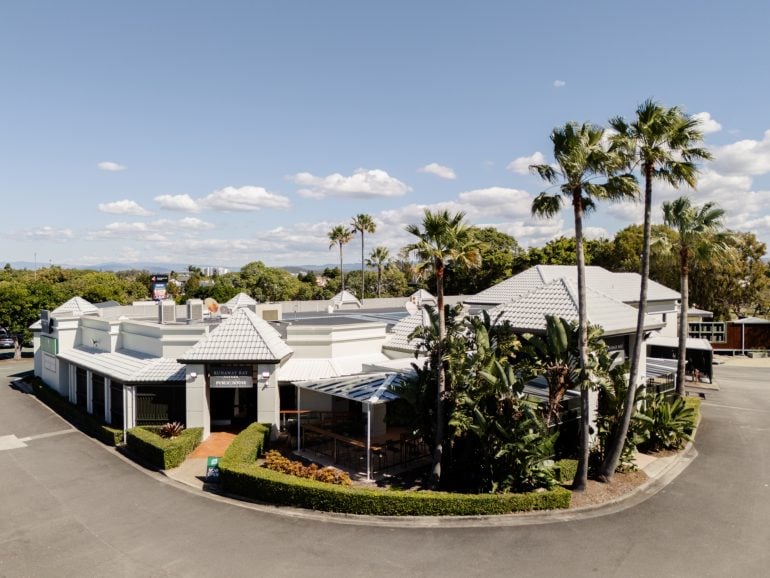
The Gold Coast offers one of the clearest examples of this shift. Known internationally for its beaches, warm climate and outdoor culture, the city is increasingly combining its traditional lifestyle appeal with a more diverse professional economy. The result is a working environment in which career decisions are becoming closely connected with questions of location, flexibility and quality of life.
This is not simply a post-pandemic story about people working from laptops near the beach. It reflects a broader reconsideration of what workers expect from employers, cities and their own daily schedules.
According to the Australian Bureau of Statistics, 36% of employed Australians usually worked from home in August 2025. Among managers and professionals, that proportion reached 59%. Flexibility was also the most commonly reported main reason for working from home, ahead of factors such as reducing commuting time.
On the Gold Coast, these national trends intersect with a city whose identity has always been strongly associated with lifestyle.
From Holiday Destination to Professional Hub
The Gold Coast remains one of Australia’s best-known leisure destinations, but describing it primarily as a tourism economy is increasingly outdated.
The City of Gold Coast reported in 2026 that the local economy had grown by 25% since 2020–21 to more than $55 billion. The city supported more than 350,000 jobs and over 83,000 businesses, while knowledge industries and health and wellbeing alone contributed more than $13 billion to the economy and supported more than 70,000 full-time-equivalent jobs.
That economic diversification matters for the way people work.
Professionals in consulting, technology, design, marketing, finance, health, education and other knowledge-based industries are less dependent on traditional industrial workplaces than many previous generations of workers. A large proportion of their work can be completed wherever reliable technology and suitable working conditions are available.
For some, that means spending several days in an office and the remainder at home. For others, it means operating a small business, consulting independently or working for an employer located hundreds of kilometres away.
Geography Matters Less — but Place Matters More
Remote technology has created an apparent contradiction. Physical location matters less for completing many professional tasks, yet where people choose to live can matter more to them personally.
If an employee no longer needs to commute to a central office every morning, proximity to a corporate headquarters loses some of its importance. Instead, other factors can enter the equation: access to outdoor space, housing, schools, exercise, cafés, transport, social networks and recreation.
This is where the Gold Coast has a structural advantage.
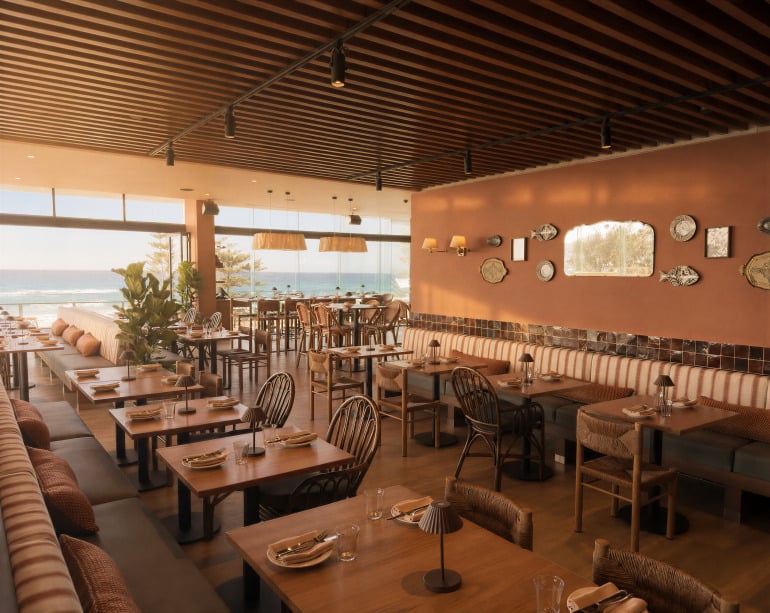
A morning run, swim or surf can potentially happen before the first meeting of the day rather than being reserved for a weekend or annual holiday. Cafés and local commercial centres provide alternatives to both the CBD office and the spare bedroom. Brisbane also remains close enough for many professionals who occasionally need to travel north for meetings or events.
The important change is not that Australians have stopped valuing their careers. Rather, career decisions are increasingly being considered alongside the broader experience of everyday life.
Flexibility Is Becoming Part of the Employment Proposition
Flexible work was once commonly treated as an employee benefit granted under particular circumstances. For many knowledge workers, it is now part of the basic conversation about how a role is designed.
ABS figures illustrate how established the practice has become. In 2025, almost six in ten Australian managers and professionals usually worked from home. Among people who worked from home, 47% had an agreement allowing flexible working hours, compared with 22% among those who did not work from home.
This has consequences for employers on the Gold Coast.
A local company competing for a specialist employee may no longer be competing only with businesses in South East Queensland. It may be competing with organisations in Sydney, Melbourne or overseas that are willing to employ the same person remotely.
At the same time, Gold Coast businesses gain access to a wider labour market themselves.
The Office Is Becoming a Purpose, Not Just a Place
Hybrid work does not necessarily mean the end of offices. Instead, it changes what people expect an office to provide.
When routine individual tasks can be completed effectively elsewhere, travelling to a workplace needs a clearer purpose. Collaboration, mentoring, relationship-building, creative workshops and complex discussions can provide that purpose.
Recent Griffith University research provides useful evidence for this more nuanced view of hybrid work. A 2026 study analysing 3,138 working days across 271 employees found different benefits depending on work location. On-site days were associated with workers feeling more included, while remote days allowed employees greater freedom to take breaks when needed. Both mechanisms could contribute to energy and recovery in different ways.
The implication is significant: the most effective model may not be a battle between “office” and “home”. It may involve deliberately choosing the environment that best suits the work being done.
Work and Leisure Are Being Reorganised Around Each Other
The traditional nine-to-five timetable created a sharp distinction between working hours and leisure hours. Flexible work makes that boundary less rigid.
Someone might start earlier to finish in time for an afternoon activity, move a lunch break to fit around exercise or family commitments, or perform concentrated work at home before travelling to a meeting later in the day.
Technology has made the same flexibility possible in leisure. A laptop or phone may be used for a video meeting in the morning and, outside working hours, for streaming, social media, gaming or digital entertainment platforms such as dice casino. The wider point is that work, shopping, banking, communication and entertainment now often share the same devices and physical spaces.
This convenience creates freedom, but it also creates a management challenge.
Flexibility Without Boundaries Can Become Constant Availability
Flexible work works best when flexibility does not quietly turn into an expectation of permanent availability.
Research from Griffith University on work-life boundary management warns that remote and hybrid work can blur the distinction between professional and personal roles. Researchers have associated poorly managed boundaries with difficulties including exhaustion, work-life conflict and reduced ability to psychologically detach from work.
This is especially relevant to a lifestyle-oriented city.
Living close to beaches, parks and recreational facilities does not automatically produce work-life balance. A person answering emails throughout dinner or repeatedly checking work notifications during personal time remains psychologically connected to work regardless of the view outside the window.
The real advantage comes when flexible working arrangements are paired with deliberate boundaries.
For employers, that can mean clear expectations about response times, meeting hours and performance. For workers, it may mean creating a dedicated work area, establishing a defined end to the working day and resisting the temptation to interpret flexibility as an invitation to work continuously.
The Gold Coast Is Encouraging a Different Definition of Productivity
Traditional workplace culture often associated productivity with visibility: employees arrived at a certain time, sat at a desk and left at another predetermined time.
Hybrid work encourages organisations to focus more heavily on outcomes.
That requires managers to ask different questions. Was the project delivered? Was the client supported? Did the team solve the problem? Are employees communicating effectively?
The shift can particularly suit entrepreneurial economies. With more than 83,000 businesses operating on the Gold Coast, the city has a substantial business community relative to its population. Its economy also increasingly extends beyond tourism into professional services, health, technology, advanced manufacturing, education and other specialised sectors.
For founders, consultants and independent professionals, flexibility can allow business activity to be organised around outputs rather than conventional office routines.
Lifestyle Can Become a Talent Strategy
Employers are also learning that location can form part of their recruitment proposition.
Salary and career progression remain important, but they are not the only factors professionals consider. Where a job allows someone to live, how often they must commute and how much control they have over their day can influence the attractiveness of an opportunity.
That gives Gold Coast employers an interesting recruitment message. Instead of trying to reproduce the traditional metropolitan employment experience on a smaller scale, they can use the characteristics of the region itself as part of the offer.
For interstate businesses, the same trend creates another possibility: employing skilled people who choose to live on the Gold Coast without requiring them to relocate to a capital-city headquarters.
A Better Lifestyle Does Not Mean Working Less Seriously
There is an easy stereotype associated with coastal remote work: laptop open, coffee beside it and the ocean conveniently in the background.
Real flexible work is more complicated.
High-performing teams still need deadlines, accountability, security, suitable technology, communication protocols and opportunities for face-to-face interaction. Employees need concentration as well as freedom. Organisations need to maintain culture even when people do not occupy the same room every day.
The strongest hybrid models therefore tend to treat flexibility as a way of designing work rather than simply removing office attendance.
This distinction is important. The Gold Coast lifestyle is not changing Australian work because people suddenly want careers to become permanent holidays. It is changing expectations because workers have seen that professional ambition and lifestyle do not always need to be opposing choices.
The Future of Work May Look More Coastal
The Gold Coast’s evolution reflects a broader national shift.
Australia is unlikely to become a country in which every professional works remotely. Offices will continue to matter, particularly for collaboration, development and social connection. Many occupations also cannot be performed remotely at all.
But the assumption that serious careers must automatically revolve around five days in a central-city office has weakened.
The Gold Coast provides an alternative model: a substantial and increasingly diverse economy operating in a place where lifestyle has always been central to the city’s identity. The City itself summarises its long-term vision as “Inspired by lifestyle. Driven by opportunity” — a phrase that increasingly describes the relationship between work and place as much as it describes the Gold Coast economy.
For Australian businesses, the lesson is not simply to allow employees to work from home. It is to think more carefully about where work creates the most value, when people need to be together and how autonomy can coexist with connection.
For workers, the shift creates a different question. Instead of asking where they need to live in order to build a career, more Australians can increasingly ask what kind of life they want their career to support.
On the Gold Coast, that question is already reshaping the working day.