
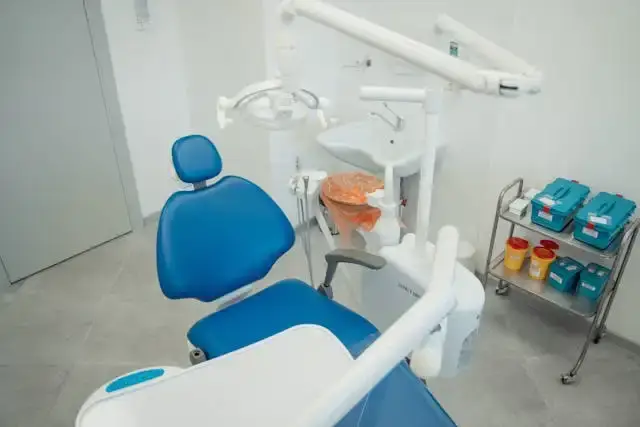
Going to the dentist can be a seriously unpleasant task. A lot of people are afraid of syringes, dental drills, and pain in general. However, with the help of modern technologies, this is no longer such a big issue.
One thing in particular that affected dentistry today is 3D technology. This kind of technology is rather important, especially for more complex cases. It can be used for anything – from dental implants to surgical procedures. Here are just some of the ways in which 3D technology transforms the world of oral medicine.
Better Treatment Planning
Tailoring the perfect treatment plan can be a complicated task. It takes a lot of knowledge, experience, time, and understanding of a particular issue to be able to do this properly. On the other hand, with 3D technology, your dentist can see the big picture even before the very start of the treatment.
While traditional dentistry allows for pretty good treatment predicament, this technology elevates it to a whole new level. No longer are the flat, two-dimensional images the basis of treatment planning.
Instead, dentists can use 3D scans of teeth, bones, nerves, and even surrounding structures. Not only are these images presented in a better way, but they are also much more detailed. Seeing everything in such great detail can predict potential challenges and develop the most suitable treatment.
Less Invasive Dentistry
The biggest issue an average patient has with oral medicine is its invasive nature. Luckily, there are ways to reduce the unpleasantness, and one of them is, of course, 3D technology. As dentists know exactly where to concentrate their work, the need for unnecessary cutting or disruption is minimised.
Detailed 3D models can be useful as a way to reduce anxiety, too. Knowing that the risk of incisions and trauma is reduced can do wonders for the patients’ mental wellbeing. Furthermore, shorter procedure times, faster healing, less discomfort, and fewer post-treatment complications make dentistry much less intimidating.
Higher Surgical Success Rates
Apart from allowing for better treatment planning, 3D imaging can also plan surgeries with great accuracy. During a Cone beam scan, dentists can determine the safest angles, depths, and positions for the tools.
When planning a surgery, risk deduction is the main concern. With these technologies, surgery planning is done with fewer potential complications. That is exactly what affects the high success rate of surgeries carried out this way.
Enhanced Patient Education
Another major advantage of 3D technology is how much easier it makes patient education. Understanding dental problems can be difficult. Most dentists’ explanations are based on traditional X-rays. Unfortunately, the majority of patient doesn’t know how to read them.
On the other hand, 3D imaging allows dentists to visually walk patients through their diagnosis and treatment plan. Seeing a clear, three-dimensional model of their own teeth and jaw helps patients understand what is going on and why certain procedures are necessary. This clarity often reduces fear and uncertainty, making patients feel more confident and involved in their care.
More Accurate Preview of Treatment Results
Wouldn’t it be great if you could preview the results and outcomes of an action even before you start it? With 3D technology, that is exactly what you can do. One of the most exciting and useful aspects of this technology is that you can predict treatment results more precisely than ever before.
With the help of digital simulations, dentists are able to show their patients how their teeth may look in the future. This could be useful after a procedure such as implants, orthodontic treatment, or restorative work.
This realistic preview helps set the right expectations and eliminates a lot of guesswork and anxiety. Since they no longer need to imagine the outcome, patients are usually more relaxed and satisfied with the entire treatment process.
Easier Implant Planning
Dental implants require a high level of precision, and 3D technology makes the planning process significantly easier. Dentists can evaluate bone density, nerve placement, and ideal implant positioning long before the procedure begins.
By using 3D scans, dentists are able to place implants in the safest and most stable locations. This not only improves the success rate of the implants but also shortens procedure time and recovery.
Precise Measurements
Accuracy is essential in complex dental cases, and 3D technology delivers extremely precise measurements. Dentists can measure bone height, width, angles, and spacing down to the smallest detail.
These exact measurements ensure that restorations fit properly, implants are securely placed, and procedures are performed with maximum efficiency. Ultimately, this precision leads to better comfort, durability, and long-term results for patients.
Conclusion
The entire medical world is being revolutionised as technology is finding its place in medicine. Dentistry is just one of the numerous fields affected by the enormous changes. With higher 3D technology usage, dentists are doing more will less resources and patients are getting more and more satisfied and carefree in the dentist’s office.