
Australia has long been a country that loves its meat. From pre-settlement use of the land, to today’s Sunday roasts, the debate over which protein reigns supreme has simmered for decades.
Now, thanks to fresh data from the Australian Bureau of Statistics (ABS) and Meat & Livestock Australia (MLA), we can officially settle the score. The winner? Chicken. And frankly, it’s not even close.
Australians are eating more meat overall, but poultry is flying ahead
According to the ABS’s Apparent Consumption of Selected Foodstuffs, Australia, 2023–24 report, Australians ate 2.3 per cent more meat and poultry compared to the previous year. That averages out to 145 grams per person per day.
And while we’re eating more and better meat in spite of a cost-of-living crisis, which meat does Australia favour? The data is clear:
- Poultry now accounts for a massive 44 per cent of total meat and poultry consumption in Australia.
- In comparison, beef, lamb and pork combined make up just 36 per cent.
- The rest comes from processed meats like salami and ham (12 per cent) and sausages (8 per cent).
To put it plainly: chicken rules the roost.
The numbers don’t lie
Let’s take a closer look at how the major proteins stack up per capita:
| Meat Type | Share of Total Meat Consumption | Average Per Capita Consumption (kg) |
| Chicken | 44% | 53.8 kg |
| Beef | 19% | 26.9 kg |
| Pork | 18% | 25.5 kg |
| Processed Meats | 12% | ~17 kg |
| Sausages | 8% | ~11.3 kg |
(Source: ABS 2023–24; MLA Market Snapshot Jan 2025)
In short, Australians are eating twice as much chicken as they are beef or pork.
Chicken: affordability, convenience, and versatility
So why is chicken leaving other meats in the dust? The answer likely comes down to a mix of price, convenience and ease of use in everyday cooking.
Chicken tends to be cheaper per kilo than beef or lamb. It’s also quicker to cook and suits a wide range of dishes in stir-fries, schnitzels, curries, roasts and salads. For time-poor families or budget-conscious households, chicken makes sense.
And with more health-conscious Australians looking to reduce fat intake, lean poultry cuts like chicken breast have found an ardent fanbase. Poultry has also become the go-to meat for meal prep, with diced chicken, thigh fillets and drumsticks offering flexible options for batch cooking.
It doesn’t hurt that chicken is a safe bet with picky eaters, too. For parents, this makes life easier at dinner time.
But beef still has our heart
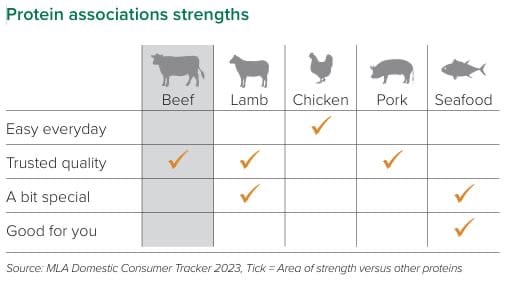
Despite falling behind in sheer volume, beef continues to hold a special place in Australian food culture. MLA’s Domestic Consumer Tracker 2023 found that beef is still Australia’s number one ‘top of mind’ protein, ahead of chicken and well ahead of pork.
Beef also scores highly in consumer perception, often seen as a trusted, high-quality protein. Words like “flavourful,” “satisfying,” and “great for entertaining” are frequently associated with beef.
So while chicken may win the numbers game, beef still captures the imagination of the Australian entertainer.
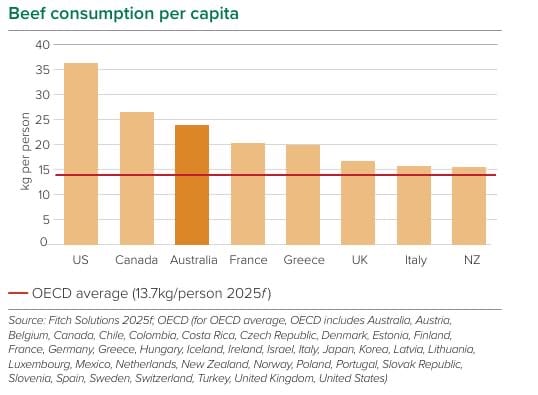
And Australia isn’t alone in its beef love. According to global comparisons, Australia is the third most beef-loving country in the world, behind only the US and Canada.
Cooking habits and preferences
Chicken may be more common on the weeknight dinner table, but beef shows up for the big moments: steak restaurant outings, burger nights, slow-cooked briskets, family barbecues and prime rib roasts. These are celebratory meals, often reserved for weekends or guests.
From a preparation standpoint, Australians tend to favour:
- Chicken: grilled, baked, stir-fried, or crumbed
- Beef: grilled, pan-seared, barbecued, slow-cooked, or roasted
- Pork: roasted or barbecued, often with crackling or glaze
- Lamb: roasted or grilled, particularly around Easter and holidays
Many home cooks will rotate between chicken and beef depending on the day of the week, the weather, or even what’s on sale. But when there’s something to celebrate, red meat often takes centre stage.
What about sausages and processed meats?
Interestingly, processed meat consumption has dropped by 12 per cent since 2018–19, according to the ABS. This may reflect changing health concerns, with many Australians trying to reduce sodium, preservatives, and processed ingredients in their diets.
Sausages, however, still hold strong with an 8 per cent share of all meat eaten. With new varieties like chicken, lamb and beef sausages made from higher-quality cuts, even the humble snag is evolving to keep up with consumer expectations.
The expert perspective
From the team at Grange Meat Co., one of Melbourne’s best local butchers, the shift in demand is clear. Online and in-store sales data mirror national consumption patterns, with chicken flying off the shelves.
That said, high-end beef cuts like tomahawk steaks and beef short ribs are still popular among customers looking to make a statement. Slow cooks, barbecues and dinner parties are where beef really shines, and the demand for quality is only growing.
Grange Meat Co. also services hospitality venues across Victoria, where beef continues to anchor pub classics and restaurant menus alike. Whether it’s a porterhouse, a wagyu burger, or a beef cheek stew, there’s still a place for red meat on the plate. It’s just being served more with more intention and reverence.
So, which meat wins?
If we’re talking about sheer volume and everyday use, chicken takes the crown. Australians are buying it more often, cooking it more quickly, and finding more ways to use it across all kinds of meals.
But if you’re talking about passion, flavour, and presence at the centre of a truly great meal, beef still has a powerful hold on the national palate.
Ultimately, the chicken vs beef debate is about choosing the right cut for the right moment. Chicken might win the weekday race, but beef is still the champion of those memorable moments.