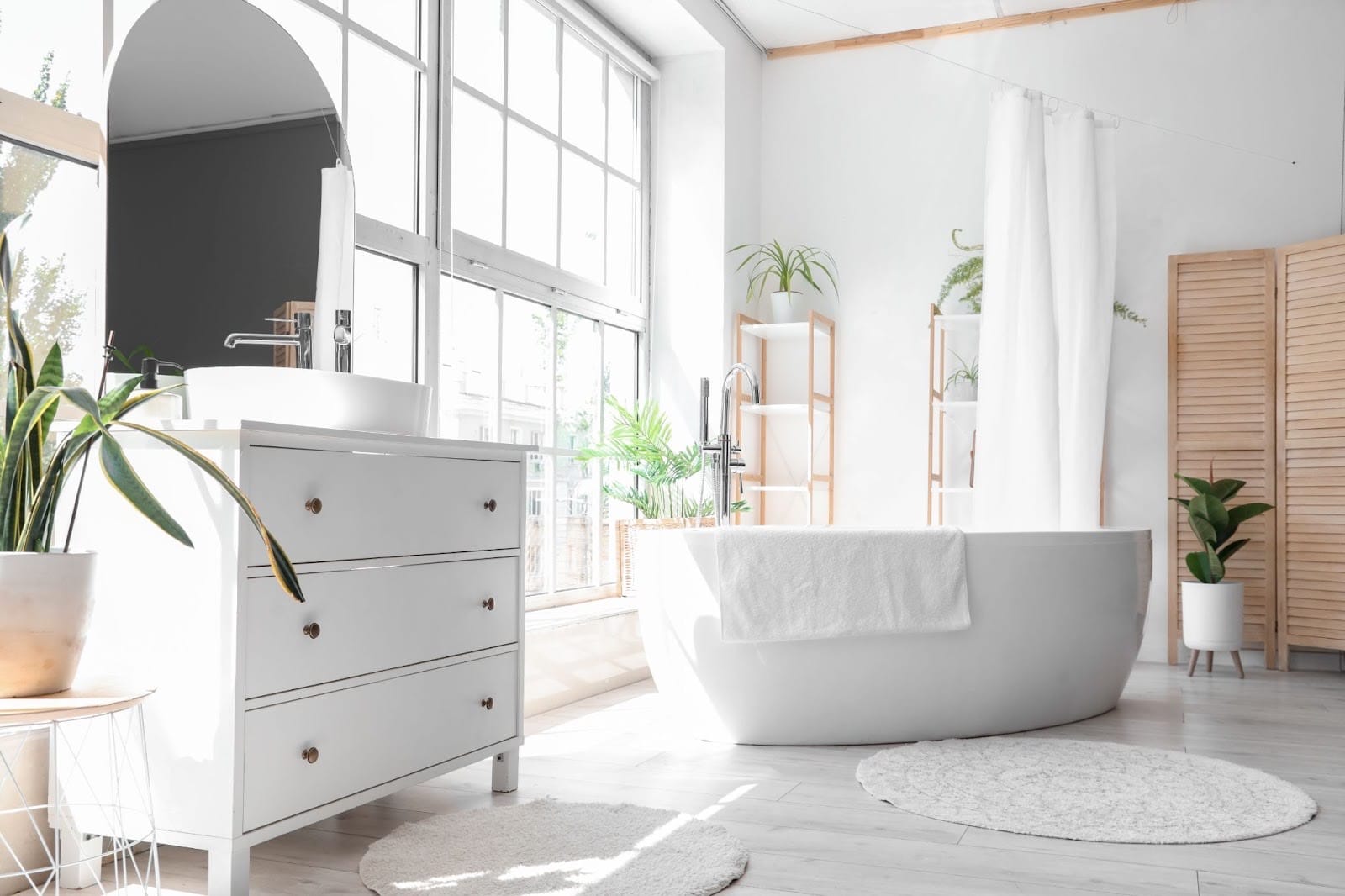
The bathroom has been steadily establishing itself as one of the most important rooms in the home. The place where we wake up and wind down. Where we retreat for five minutes of quiet or speed through morning routines. As we all lead busier lives and our homes become increasingly smart, we’re yearning for living spaces that aren’t just beautiful but that actually work with our lifestyle. Surfaces that are practical to clean, comfortable to live with, a little luxurious, but most of all, fit with how we use them.
Functionality with feeling is the name of the game for 2026 and as a result, bathroom design is taking a turn. Shiny, clinical finishes are making way for more tactile, raw materials. At the same time, technology is creeping in subtly to add value, comfort and smart living without taking over.
What do we mean? Concrete baths with rounded edges, mood lighting, and talking mirrors (in a good way, of course). We look at the biggest bathroom trends set to shape 2026, from raw materials to smart technology, and everything in between.
The Rise of Concrete: Minimalism with Warmth
Concrete basins in Australia used to be a niche bathroom detail. These days, they’re a must-have. They’re fast becoming the look and feel of the contemporary bathroom space. Gone are the days when concrete basins were relegated to industrial lofts or ultra-minimalist studios. We’re now finding concrete making a statement in spaces with a quieter aesthetic; one that values honesty, tactility and a sense of calm.
Concrete has raw texture and soft sheen, with a sculptural weight that lends an air of permanence to a bathroom. There’s a sense that these details are designed to stay. It’s this grounding energy that sets concrete apart from the seasonal trends that come and go with each new furniture and homewares collection.
Driving the trend is a focus on craftsmanship and materiality. A lot of Australian designers are using GFRC (glass fibre reinforced concrete) for its strength, durability, and ability to be finished to a high gloss. The mix is stronger, less porous and denser than traditional concrete and provides more freedom in design. You won’t see any prefabricated moulds and mass-produced pieces. In the way that ceramics require high-temperature kilns, concrete is cast and finished by hand. Which means every GFRC basin is slightly different to the last; variations in veining, tonal shifts and air pockets are all intentional detail.
Concrete has become more than a statement basin. Designers are now finding unique ways to pull through its material language across a bathroom scheme. Concrete is being used to blend vanity units into walls, finish shower recesses with microcement or sculpt shelving from the same cast mix. Spaces feel more considered and cohesive as a result, with concrete providing a subtle thread that connects the room. Mixed with natural timbers, brushed brass tapware or linen shower curtains with texture, it provides warmth to minimalism rather than taking it away.
The use of concrete has serious practical appeal, too. Concrete is incredibly durable but still surprisingly forgiving in its day-to-day use. It’s less susceptible to fingerprints and water spots than glossier surfaces, and the way the material dulls over time provides a warm, soft patina that’s increasingly appealing. The best way to look after your concrete basin is refreshingly simple, too — gentle cleansers, mild soap and no need to battle the way a material ages naturally.
Concrete’s popularity comes down to its grounding effect on design. It’s a reminder that a material can be beautiful in its honesty. It’s tactile, imperfect and quietly luxurious. We’re now spoiled for choice when it comes to “new” finishes and materials. Concrete provides a welcome change from this.
Natural Textures Take Centre Stage
Whether in search of tranquillity or simply inspired by nature, after a period where white, gloss and sleek ultra-modern spaces have dominated bathroom design, the times are a-changing. Homeowners and designers are turning towards more human materials and textures; those that look and feel more organic and imperfect, like stone, timber, clay and lime-wash finishes. Natural textures instantly inject depth, emotion and humanity into minimal interiors, creating rooms that are warm, layered and alive.
As mentioned, this trend is less about rustic and more about realness. Hand-cut stone tiles, timber vanities showing natural grain and raw clay render walls are all examples of one thing: honesty of material. There is an authenticity in showing the craftsmanship of your bathroom fittings. We know these materials aren’t sterile, they show variations of light that mass-produced tiles and laminates can never offer.
Textures are also being mixed with purpose. Cool stone is being paired with warm oak, while rough, tactile walls are being contrasted with softly curved fittings and fixtures. The aim is to create harmonious balance, rather than contrast. If you’re after more minimal ideas for your bathroom interior, even natural linen blinds or handmade ceramics can add a human touch and stop a space feeling too cold.
Wondering about other ways you can incorporate natural elements into your interior design? Start with your five senses. Think about the way a timber surface feels when you run your hand over it, or the changing texture of stone when it catches the light. These kinds of details will build atmosphere and connect your bathroom to the outdoors without you needing to go overboard.
Smart Tech Meets Everyday Rituals
There’s been an unmistakable shift in our relationship with bathroom technology in recent years. It has become much more discreet: less about dropping jaws and more about making life simpler. The latest high-tech bathroom fixtures are designed to simplify daily routines and support wellbeing, all while blending seamlessly into the design.
Take voice-controlled lighting, temperature-controlled showers, and motion-activated taps, for example. These types of bathroom fixtures are becoming the standard in homes because they take the friction out of the bathroom routine, like warming up your water to the right temperature, lowering the lights when the sun goes down, or conserving water with an intelligent flow system. The technology works invisibly and non-intrusively, with comfort and ease in mind, adapting to your needs rather than forcing you to adapt to it.
It also works much more subtly with design than bathroom technology has in the past. You see smart mirrors transforming into wellness stations. They can show the time, the temperature, or help you follow your skincare routine without compromising a sleek, minimalist look. Heated floors or self-adjusting towel rails add a sense of quiet luxury. These kinds of features are there when you need them, intuitive and invisible otherwise.
Designers are also considering sustainability and durability. Many of these new bathroom innovations are compatible with renewable energy sources or use timers and motion detectors to reduce waste.
Sustainable Design, Elevated
Upcycling bathroom interior design is a huge trend in 2026, as people look for ways to be more sustainable. This can mean choosing water-efficient fittings, low-energy lighting, and sustainably sourced stone and other materials, as well as considering the long-term durability and repairability of items. Energy- and water-efficient fixtures are increasingly popular as homeowners look to reduce both their carbon footprint and their utility bills.
So, why do bathroom upgrades matter? By investing in high-quality, efficient bathroom fixtures and fittings, homeowners can reduce their environmental impact and future waste. Every shower, basin, tap and other fixture they choose has the potential to contribute to a more sustainable home. Additionally, a well-designed and upgraded bathroom may not need to be completely remodelled as often, reducing the material waste associated with such projects.
Designers and homeowners are also thinking about the lifecycle of the products they use. This could include the use of long-lasting materials such as natural stone, concrete and reclaimed timber, or modular cabinetry and fittings that can be easily replaced or repaired. It also involves choosing high-quality hardware that can withstand regular use and won’t need to be replaced as frequently.
Sustainability is also a multi-sensory experience, and many of these upgraded bathrooms incorporate elements such as plants, natural light, and natural textures to create a space that feels alive and restorative. It’s a reminder that being mindful of your environmental impact doesn’t mean sacrificing on style, comfort, or ambience (in fact, quite the opposite).
Statement Pieces and Bespoke Design
No one wants a bathroom that looks like their neighbour’s anymore. 2026 bathrooms are breaking away from cookie-cutter styles in favour of bespoke designs that reflect the individuality of the homeowner and designer. Splurging on artisan fixtures and fittings, one-off tiles, and custom finishes is the name of the game. These statement pieces will make a bathroom feel personal and imbue the room with a unique sense of mood and character.
Hand-carved basins, sculptural freestanding tubs, mosaic walls and feature partitions, custom timber cabinetry and handcrafted millwork are all gaining popularity. The focus is on the artistry of the object: the way the curve of a bath sings to the ears of a sculptor, the story behind the combination of tiles and texture in a wall treatment, or the colour choices that make a room pop and give it character. These elements are all tactile, lasting, and will make the everyday feel like a quiet moment of luxury.
Bespoke design also offers a range of creative problem-solving for the bathroom, giving homeowners a chance to customise solutions that are as functional as they are beautiful. From maximising storage with custom vanities to perfect one-off shelving that fit oddly shaped spaces seamlessly, unique finishes that unite the room, and statement furniture that double as art, these ideas will make any bathroom cohesive, intuitive, and completely yours.
Statement pieces do not always need to be large and overpowering, either. A mirror, a tap or wall panel can be the perfect finishing touch to a bathroom that already has a high-end, considered feel. Combine these elements with natural textures, concrete features, and thoughtfully-integrated tech and your bathroom will feel layered and lived in.
Spaces That Ground and Inspire
The 2026 bathroom isn’t defined by trend or technology, it’s defined by the desire to be more human. Texture, materiality and technique come together in a smart simplicity. A mix of tactile materials like timber, sculptural concrete basins and artisan finishes that are chosen for their connection to the senses, the body and how we live. Integrated technology that exists unobtrusively to elevate comfort and enhance experiences.
The results are bathrooms that are grounded, personal and considered. Beautiful proof that real luxury is in the meeting of material, craft and innovation.