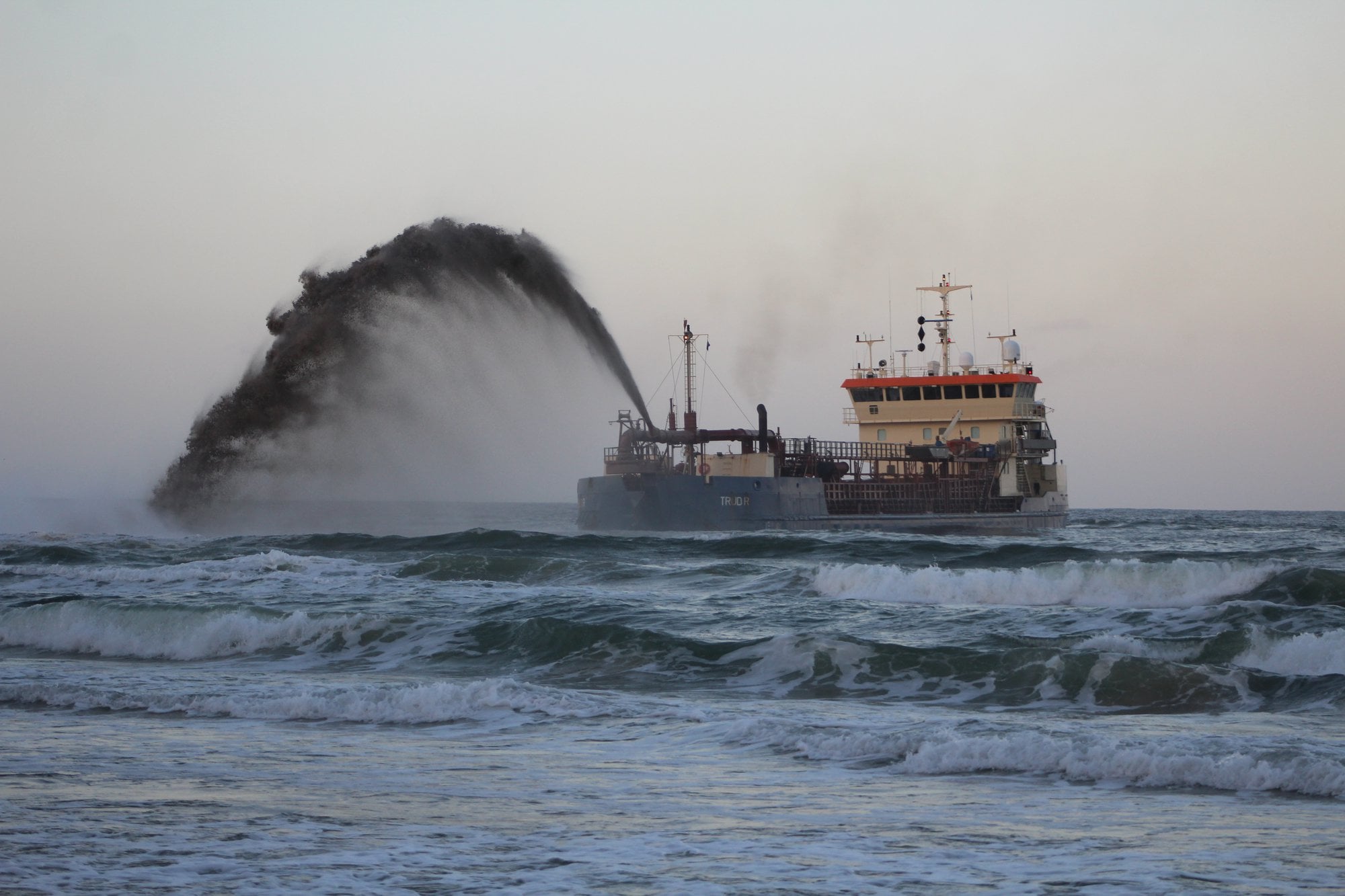
The Trud-R offshore dredge has officially returned to the Gold Coast to pump fresh sand onto the city’s beaches. This operation is a continuation of the operation repairing shoreline damage caused by Tropical Cyclone Alfred as part of the broader beach nourishment programme for the city.
Following heavy coastal erosion, government officials are looking to build up a significant sand buffer to shield the community from future storms. The plan aims to deposit 800,000 cubic metres of sand along the most vulnerable stretches of beach before the upcoming storm season.
Targeting the Hardest-Hit Shores
While last year’s recovery efforts focused on Surfers Paradise and Main Beach, these areas reportedly held up well during recent severe weather. This year, the focus shifts further south.
Authorities have flagged Miami and Mermaid Beach as the immediate priority, with works eventually progressing north toward Broadbeach, Surfers Paradise, and Main Beach. According to the recovery plan, the coastal stretch between Miami and Broadbeach suffered significant erosion during Tropical Cyclone Alfred and has struggled to naturally recover.
The operation is positioned as a proactive measure to help the coastline withstand increasingly frequent extreme weather. Federal Minister for Emergency Management Kristy McBain stated that rebuilding these sand buffers is critical for safeguarding local communities and critical infrastructure.
Balancing the Economic Cost
The current dredging operations, scheduled to run between May and September, will cost approximately $13 million. However, this is just one piece of a larger $37.2 million coastal recovery initiative funded jointly by the Australian and Queensland governments.
Local leaders argue this is a necessary expense to protect a major financial asset. Mayor Tom Tate noted that the beaches contribute roughly $3.4 billion annually to the local economy, heavily supporting tourism and small businesses.
“Dredging operations reduce erosion and result in faster recovery following storms while supporting the city’s reputation and our enviable lifestyle,” said Mayor Tate.
“Taking proactive action is crucial for the long-term sustainability of our beaches.
“Last year we focused on the most at-risk areas of Surfers Paradise and Main Beach and we have seen that these beaches have fared much better than those further south during recent conditions.
“This year the majority of the dredging will focus on Miami to Broadbeach, which were all significantly eroded during Tropical Cyclone Alfred and haven’t recovered well.”
Similarly, Queensland Minister for the Environment and Tourism Andrew Powell highlighted that returning the beaches to peak condition is essential for driving jobs and maintaining the region’s coastal lifestyle.
The dredging process is considered a cost-effective method for moving large amounts of sand quickly, which ultimately widens the beaches and reduces the direct risk to seawalls, public parks, and other beachfront assets.