Some spaces just have it. You walk in and something shifts. Your shoulders drop, your breathing slows, and you find yourself thinking, “I could stay here for a while.”
It is hard to put your finger on why. It is not always about expensive furniture or perfect lighting, though those things help. It is more about intention. Someone made deliberate choices, and you can feel that without being able to name it.
The good news? That feeling is not exclusive to five-star hotels or high-end design studios. Whether you are working on your own home or managing a venue that sees hundreds of visitors, the same thinking applies. And most of it comes down to two things: how comfortable people feel, and how naturally they move through space.
Start With How the Body Feels
We tend to decorate from the outside in. Pick the colour palette, find the right rug, hang something on the wall. Comfort, if it gets considered at all, usually comes last.
That is backwards.
How a space feels physically sets the tone for everything else. A beautiful room that leaves you tense and uncomfortable after twenty minutes is not a well-designed room. It is just a well-styled one.
This matters most in the spaces where you spend the most time unwinding, your living area, your bedroom, anywhere you go to decompress after a full day. Most people do the basics well enough: a decent sofa, blackout curtains, maybe a speaker for background music. But there is one addition that genuinely changes the recovery potential of a room, and it tends to get overlooked.
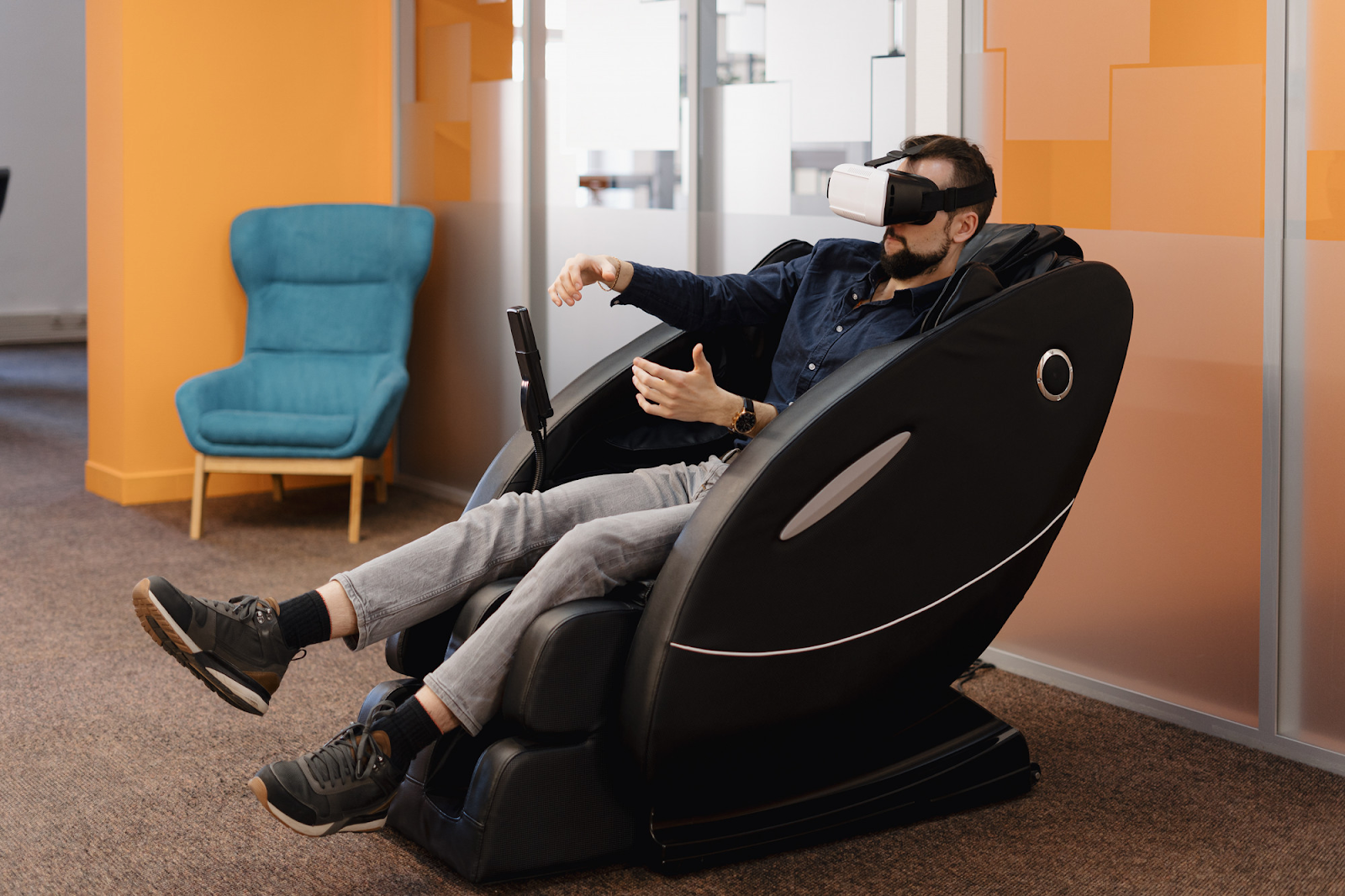
A massage chair.
Not the oversized recliner stereotype from years past. The newer generations are genuinely stylish pieces that fit into a modern room without looking clinical or out of place. More importantly, they do something no sofa can: they work on your body while you rest. The tension that builds up across your shoulders from hours at a desk, the tightness in your lower back, the general heaviness of a draining week. A good chair addresses all of that, actively, not just passively.
If you have not looked at what is available recently, it is worth taking the time to shop massage chair online. The range is broader than most people expect, and shopping online means you can take your time comparing features, reading real reviews, and making a considered choice without someone hovering nearby trying to close a sale.
Build the Room Around the Intention
Once you have committed to comfort as the starting point, the rest of the room should follow that lead.
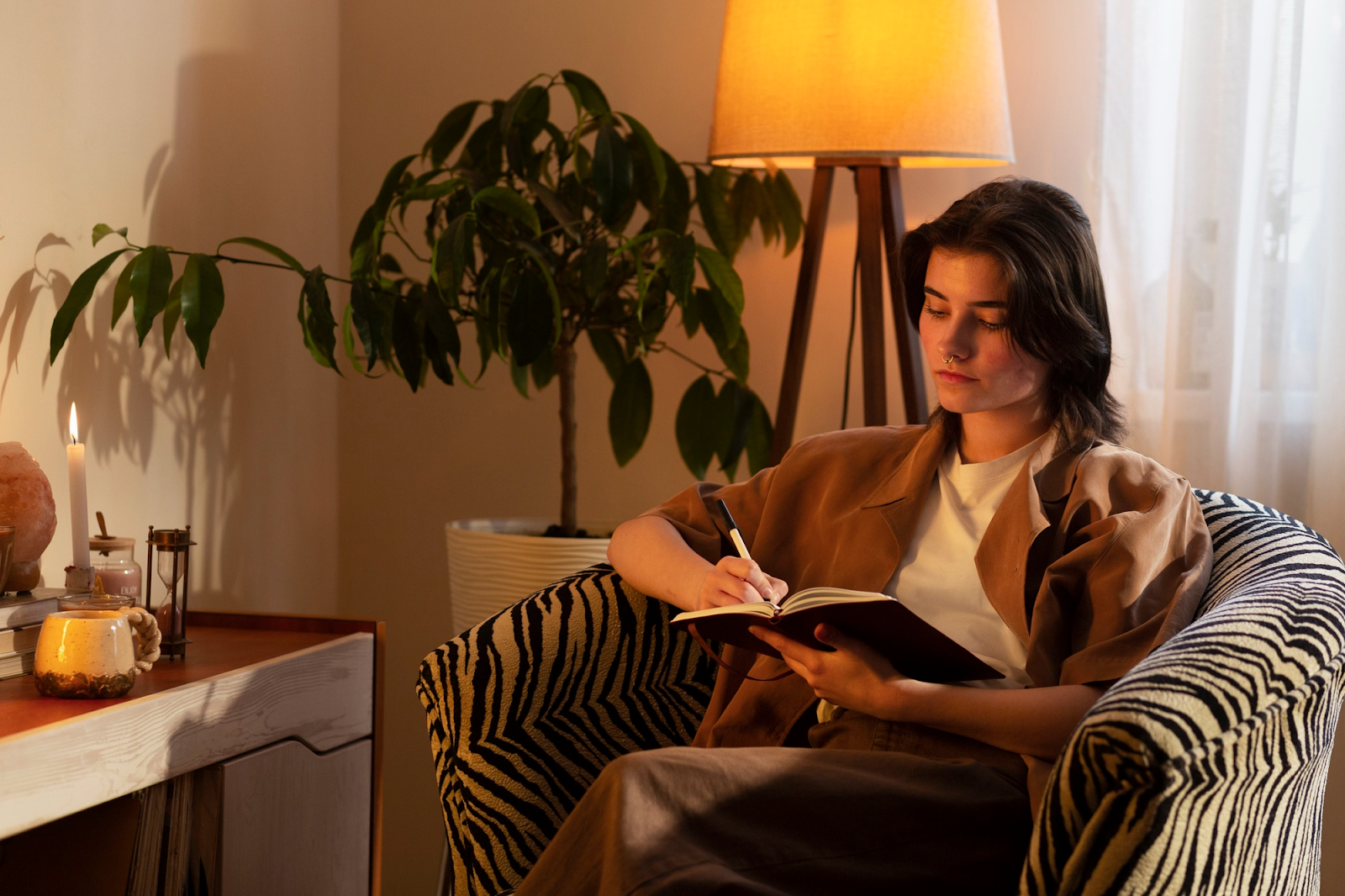
Think about light first. Harsh overhead lighting keeps your nervous system switched on. Warm, dimmable options, a floor lamp in the corner, a salt lamp on a side table, signal to your brain that it is time to slow down. It sounds simple because it is, but the difference is real.
Soft furnishings absorb sound in a way that hard surfaces do not. A room with a rug, cushions, curtains, and a bookshelf feels acoustically softer. That softness has a direct effect on how relaxed you feel without you ever consciously registering why.
Plants help too. There is something about living things in a room that just settles the atmosphere. If you are not confident in keeping plants alive, quality artificial ones do more work than people give them credit for.
None of these are large investments on their own. But together, they create the kind of room that supports genuine rest rather than just offering a place to sit. For more ideas on building this kind of environment into your daily routine, there is some practical reading available on wellness-focused living that approaches it from several angles.
Now Shift to the Public Side of Things
Everything above is about private space, your home, your recovery, your peace. But the same instinct for creating a well-considered environment applies equally to professional and public settings.
Restaurants, retail stores, galleries, event venues, all of them live or die by the experience they create. And that experience starts before anyone orders a meal, tries on a jacket, or picks up a catalogue. It starts the moment someone walks through the door.
Two things determine that first impression more than most operators realise: visual presentation and spatial flow.
Presentation is the obvious one. Lighting, decor, the overall aesthetic. But flow is where a lot of otherwise good venues quietly fall apart. When people are not sure where to go, when queues feel disorganised, when movement through a space feels uncertain, a low-level friction sets in. Guests feel it without being able to name it. And it colours everything that follows.
This is where barrier systems genuinely earn their place. Not as an unfortunate necessity, but as a design tool.
Quality rope barriers do two things at once. They guide movement practically, keeping queues tidy and pathways clear. And they communicate something visually. A set of well-chosen stanchions with a rich velvet rope tells visitors that someone thought carefully about their experience. It signals polish. It signals that the space is run with intention.
The finish you choose matters. Brushed steel reads differently to polished gold. Matte black suits a different kind of venue than warm brass. Getting that alignment right means the barriers become part of the overall look rather than a visual interruption.

The Psychology Behind a Well-Run Space
Here is something worth understanding about how people experience environments. Uncertainty creates low-level stress. When someone enters a space and is not immediately clear on where to go or how things work, their brain registers that as a mild threat. They become slightly guarded. Slightly less at ease.
Flip that, and something interesting happens. A space with clear, intuitive flow lets people relax into it. They browse longer. They engage more. They leave with a better feeling about the place, even if they never identified the queue management system as the reason.
High-end retail environments have understood this for a long time. The feeling of walking into a well-run store is not just about the products or the interior design. It is about every element working together, including the invisible architecture of how you move through the space and where you naturally pause.
For independent businesses and smaller event organisers, proper barrier systems are one of the most cost-effective upgrades available. The initial investment is modest. The return, in terms of perceived professionalism and visitor experience, is disproportionately large.
This applies equally to temporary events. A product launch. A pop-up. A private dining experience. A market stall at a premium end of the market. In each of these, the spatial setup tells people what to expect from everything else before a single interaction has taken place.

The Through Line Between Both Worlds
A recovery corner at home and a polished professional venue seem like very different things. One is personal and private. The other is public-facing and commercially driven.
But the underlying philosophy is identical.
In both cases, someone decided that the experience of being in that space was worth thinking carefully about. Someone chose comfort over convenience. Someone considered how people would feel, not just what they would see.
At home, that looks like a room built around genuine recovery. Thoughtful lighting, good textiles, and a chair that actually does something for your body at the end of the day.
In a venue, it looks like clean flow, quality fixtures, and the kind of attention to detail that guests notice without quite knowing why they feel well looked after.
The spaces that get remembered, whether someone is recounting a brilliant night out or describing a friend’s house they never want to leave, always share that quality. Someone made intentional choices. And those choices added up to something that felt, unmistakably, like care.
That is not a complicated idea. It is just a consistent one. And it is available to anyone willing to think about a space from the inside out.