
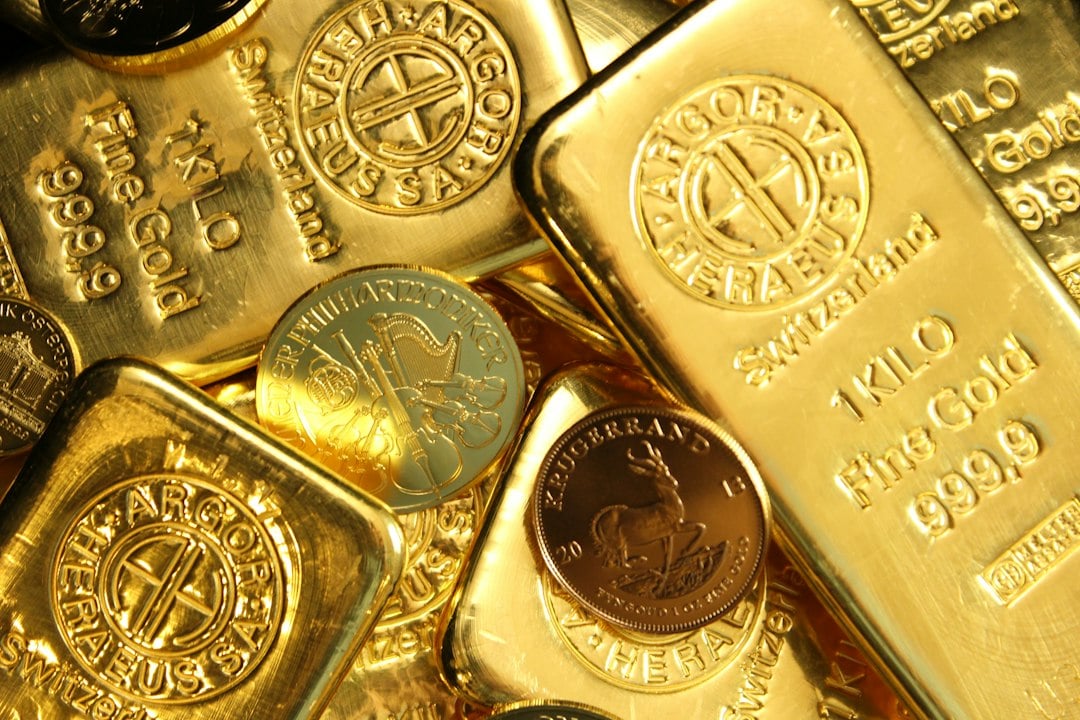
A gold bar carries little visible evidence of the mines, investment decisions, and export networks behind it. That makes a country’s influence on the precious metals market harder to judge than its annual mining output might suggest. For Australia, the question stretches from Western Australia’s goldfields to bullion buyers in Asia, Europe, and America.
Understanding Australia’s gold industry in the precious metals market means looking beyond the metal leaving its mines. International demand, the condition of existing operations, and the pace of new development all shape that relationship. With gold prices attracting attention, the gap between the value of Australia’s resources and its ability to bring them to market deserves a closer look.
Where Australia Sits in the World Gold Market
Australia supplies roughly 10 million ounces (moz) of gold annually, equivalent to about 300 tonnes. World Gold Council figures for 2020 placed it second behind China in gold production, illustrating its weight in global supply. Western Australia produces the large majority of national output, with New South Wales another significant contributor.
Annual production tells only part of the story. Geoscience Australia’s 2023 assessment identified Australia as holding the world’s largest gold reserves, giving it long-term significance beyond the ounces mined in any particular year. Gold also ranks among the country’s most valuable export earners, with most domestic production reaching international markets rather than remaining in local vaults.
Why Global Buyers Keep Turning to Australian Gold
Australia’s influence rests on supplying buyers whose decisions largely originate offshore. Its gold reserves provide long-term resource potential, while its mines, refineries, and export networks connect that potential to international investment and monetary demand.
Safe-Haven Demand in Uncertain Times
Investors treat gold as a safe-haven asset during geopolitical uncertainty, although that label doesn’t guarantee protection against every market decline. Inflation concerns also draw attention to an asset that isn’t a currency or a company’s promise to repay.
Demand reaches the physical market through several channels. A physically backed gold ETF holds bullion against its shares, connecting investment flows with demand for metal. Australian producers sell into that international market rather than a separate domestic pricing system. Stronger demand therefore matters through the gold price they receive, not simply through an individual shipment’s destination.
Central Banks as Steady Buyers
Central bank gold buying serves a different purpose from short-term investment trading. Reserve managers hold gold alongside other reserve assets, seeking diversification rather than jewellery demand or industrial use.
The World Gold Council tracks this institutional demand separately from investment, jewellery, and technology consumption. That distinction matters: official purchases reflect reserve-management decisions, while fund flows respond to investors entering and leaving positions.
Central banks aren’t a guaranteed price floor, however. Their purchases vary, and some institutions sell. Australia’s exposure is to the combined global demand picture, not an assured stream of purchases from any particular institution.
The Kangaroo Coin and Australian Bullion Abroad
The Perth Mint connects mine production with internationally traded bullion through refining and minting. Its Australian Kangaroo gold coin contains .9999 fine gold and represents a recognisable Australian product within the sovereign bullion coin market.
Distribution extends through Asian and European bullion wholesalers, along with US retail channels where Monex, one of America’s high-volume dealers lists it alongside other sovereign coins. This network illustrates how Australian bullion reaches investors beyond its domestic market. Coins provide a visible national identity, while refined bars connect Australian supply with the wider wholesale trade.
The Mines and Miners Behind Australia’s Output
Australian supply comes from large, established operations alongside mid-tier mines with different operating lives and expansion plans. Western Australia forms the industry’s main production base, but gold-bearing deposits elsewhere connect national output with a broader mix of mineral extraction.
Western Australia’s Goldfields and Major Producers
Newmont’s Boddington mine in Western Australia produces gold and copper, illustrating the scale and mixed-metal character of some Australian operations. Northern Star Resources and Evolution Mining are ASX-listed gold producers with portfolios spanning multiple operations.
That portfolio structure matters when interpreting national production. A company can maintain output by expanding one mine while another moves through lower-grade material or approaches closure. The national total combines those separate operating decisions.
Western Australia’s mines also support a network of processing facilities, contractors, and mining expertise. Still, established infrastructure doesn’t make every remaining deposit economic. Each operation needs enough recoverable metal to justify extraction and processing costs.
Gold as a Byproduct of Copper Mining
Gold as a byproduct creates a different supply relationship from a mine developed primarily for gold. Newmont’s Cadia mine in New South Wales produces gold and copper, while BHP’s Olympic Dam in South Australia produces copper, uranium, gold, and silver.
The distinction between byproduct and co-product reflects each metal’s economic importance to the operation, not which appears first in its description.
For these operations, gold prices alone don’t explain production decisions. Copper revenue, processing capacity, and available ore also matter. Consequently, Australia’s gold supply connects with the base metals cycle: a strong bullion market doesn’t automatically justify expanding a copper-led operation.

Why Record Prices Haven’t Lifted Production
A record price isn’t a production schedule. The Australian dollar gold price per ounce describes revenue potential, but mines must work through existing ore bodies, equipment limits, and development commitments before stronger prices can translate into additional saleable metal.
Falling Grades and Ageing Mines
Head grade describes how much gold the ore contains before processing. When it falls, a mine must process more material to recover the same amount of gold, assuming recovery remains unchanged.
A processing plant near capacity can’t handle unlimited additional ore. Higher prices can support lower-grade material economically without producing a corresponding increase in ounces.
Ageing operations face another problem: replacing depleted mining areas requires development before extraction can begin. A closure removes supply immediately, whereas a replacement adds output only after construction and commissioning.
Currency movements complicate the picture further. A weaker Australian dollar raises the local-currency value of a given US-dollar gold price without changing physical production capacity.
Capital Rotation and the Exploration Pipeline
Gold’s investment appeal also competes with opportunities in lithium and nickel. When those markets weaken, investors can redirect capital toward gold exploration projects, mine extensions, and proposed restarts.
Fresh funding doesn’t equal fresh production.
Exploration must establish a deposit worth developing. Teams then need to resolve mine design, processing requirements, approvals, financing, and construction. A restart can avoid some infrastructure work but still needs an economic plan and operational equipment.
A gold production forecast to 2030 therefore needs more than a price assumption. Its credibility rests on which projects are funded or being built and how their output compares with depletion elsewhere.
Australia’s gold reserves represent long-term potential, not a production timetable.
What Australia’s Role Means for the Precious Metals Market
Australia connects a substantial gold resource base with international buyers through mining, refining, and bullion distribution. Its importance extends beyond any single year’s gold production because its reserves underpin a continuing development pipeline.
That pipeline, rather than price alone, determines how much influence the country can sustain. Offshore demand can strengthen the incentive to produce, but it can’t reverse depletion or complete an unfinished mine. Australia’s role ultimately rests on converting geological potential into dependable supply while existing operations mature. The market signal comes from buyers; the physical response must come from the mines.