
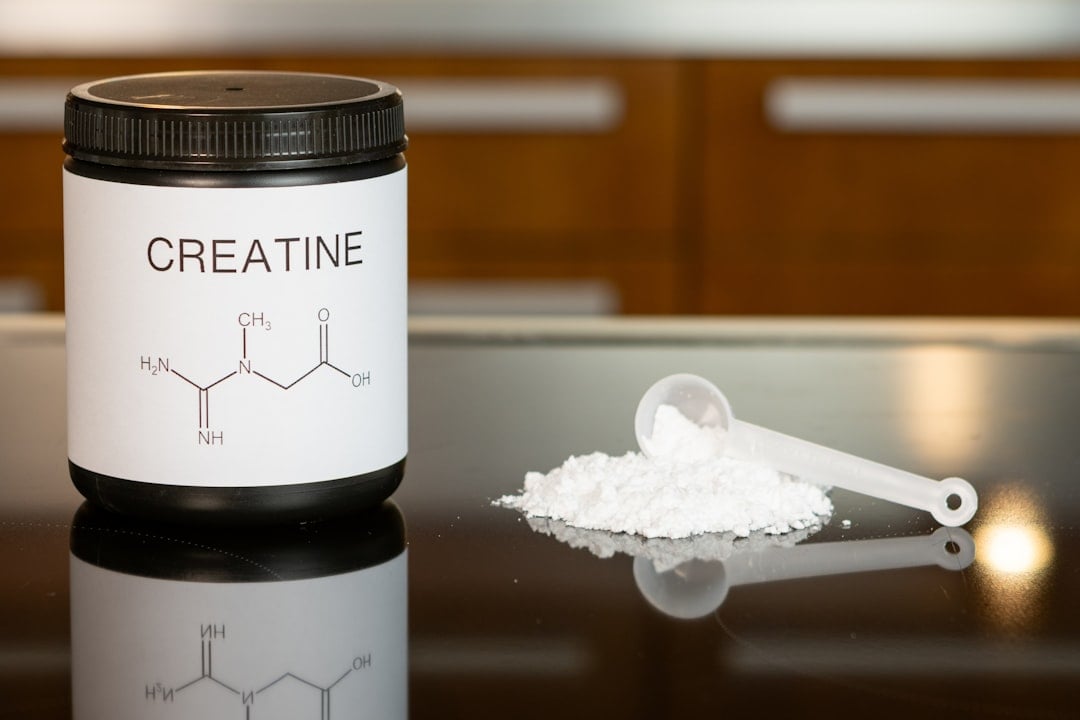
Walk through any of the bigger gyms between Robina and Burleigh over the last six months, and you will hear the same shift in conversation. Creatine has come back into the regular vocabulary. The lifters who never quite stopped using it are now the ones being asked about it.
A trainer at a gym in Mermaid Beach told me he counts four or five people a week now asking about it specifically. Most of them are not the obvious crowd. People in their forties. Mothers picking up training again after kids. Surfers who have started doing strength work to keep their shoulders intact past fifty.
This is mostly fashion catching up with science, which happens more often in the supplement world than people like to admit. Creatine has been one of the most studied compounds in sport for nearly forty years. The conclusions have barely shifted. What has changed is the audience now paying attention.
What creatine actually does
The body produces creatine on its own, mostly in the liver, and stores it in muscle tissue. Meat and fish add a little more. Whatever ends up on the plate falls well short of what muscle can hold, which is the gap supplementation fills.
The mechanism is unromantic but worth understanding. Muscle cells use ATP for short, hard efforts. The first few seconds of a sprint. The last reps of a heavy set. The explosive push off the wall on a Burleigh wave. ATP runs out fast. Creatine helps regenerate it, which means the next effort starts from closer to a full tank.
For training that lives in the short, intense end of the spectrum, that difference compounds across a session. Across a month, it shows up as more reps at the same weight or the same reps with a heavier bar.
The form most worth taking
Walk down the supplement aisle and creatine comes in a dozen formats. Ethyl ester, hydrochloride, buffered, nitrate. The marketing around each one promises better absorption, less bloating or some other small improvement that the trials have not actually verified.
Creatine monohydrate is still the form with the deepest evidence base. It is cheap, well-tolerated and effective at three to five grams a day. The newer formats are not bad. They just have not earned the price difference they ask for, which is unusual for a supplement category where new usually means better priced.
For Gold Coast lifters comparing options on a phone in the supplement aisle, the EliteSupps range of creatine monohydrate is a practical place to see what the Australian market is offering, including the premium grades for anyone who cares about source verification.
Why the science has held up
A lot of supplement research reads like a coin flip. Creatine reads like a settled debate.
Strength gains in beginners and intermediates. Modest increases in lean mass. Better recovery between sets. Those findings have been replicated more times than any of us have time to read. The newer claims, particularly around cognitive performance under sleep deprivation and improvements in mood markers, are showing up consistently and are slowly moving from “promising” to “probably real”.
The persistent myths around the supplement have been quieter than they were ten years ago. Creatine does not cause hair loss, despite a single 2009 study that keeps getting recycled. There is no kidney concern in healthy adults, despite repeated tests at high doses for years. The most common reason creatine appears not to work for someone is that they took it for two weeks and gave up before saturation actually happened.
The loading phase myth
For a long time, the standard advice was to load with twenty grams a day for the first week, then drop to a maintenance dose. The science has since shown that is largely unnecessary.
Saturating muscle creatine stores takes around three to four weeks at a steady three to five grams a day, with or without a loading phase. Loading just gets you there a few days earlier and tends to come with stomach upset for the trouble. Most lifters who skip it never notice the difference.
Timing inside the day does not matter. Before training, after training, with breakfast, with whatever you put in the shaker on the way out the door. Consistency across weeks is what gets the muscle stores full. Missing the occasional day is not a problem.
A reasonable approach for Gold Coast training
For someone lifting three or four times a week with serious intent, a daily dose of three to five grams of creatine monohydrate paired with the basics is enough. The basics being adequate protein, real sleep and training that progresses rather than just changes for the sake of novelty.
Hydration moves up the priority list a little once you start. Creatine pulls water into muscle cells, which is part of how it works, and most lifters in this part of the country are already running a litre or two below ideal on a normal day. The fix is not complicated. Drink more, salt your food properly and stop relying on a single 600 ml bottle to carry you through a Saturday session at Bond.
The Queensland climate also stacks the deck against anyone who is loose with electrolytes. Sodium especially gets undervalued. A pinch in the bottle on a hot summer session does more than most people expect.
A small note for the surf crowd
Creatine is not just a gym tool. Repeated short bursts of effort are exactly what it supports, and a typical surf session is a long string of those.
The paddle out, the duck dives, the hard push to get onto a wave. None of that is endurance work in the classic sense. It is dozens of short near-maximal efforts spread across an hour or two of water time. The same energy system creatine targets in the squat rack is what gets taxed in the lineup at Snapper.
That does not mean every surfer needs to start supplementing. It does suggest that anyone training hard on land and surfing on the weekend is probably leaving something on the table by skipping it.
The quiet test
For anyone who has not tried it, the simplest version of the experiment is this. Three to five grams a day, taken with anything, every day for six weeks. Keep everything else the same. Training intent, food, sleep.
Most people notice something between week three and week five. A bit more in the tank on the last set. Recovery that does not drag into the next session. Nothing dramatic, nothing the wellness shelf is going to package with a fluorescent tub. Just the kind of small, steady edge that has kept this old molecule on stack lists for forty years.