

Most businesses don’t realise they’ve chosen the wrong managed IT provider until something breaks at 2am on a Sunday. Sorting through the best managed IT providers is genuinely tricky because pricing is bundled, service tiers rarely match up between companies, and “24/7 support” can mean anything from a live engineer to an automated ticket queue. After reviewing provider track records, client case studies, and real-world service outcomes across the Australian market, the gap between advertised availability and actual response quality becomes very clear. This guide covers seven providers worth your attention, with honest context on who each one actually suits.
The shortlist methodology
Provider track records, publicly available client reviews, case studies, and service details from directories and official websites were used to build this list. Only providers with a verified history in managed IT services made the cut.
→ See the full research breakdown
- Techware – Best for small and medium-sized business managed IT services
- Tecala – Best for mid-market managed services
- Powernet – Best for commercial IT managed services and communications
- Accel IT – Best for SME IT support and managed services
- Truis – Best for enterprise IT infrastructure and managed services
- Emerging IT – Best for small to mid-sized business IT management and cloud solutions
- VITG – Best for systems integration
Why Managed IT Providers Are More Than a Line Item
Picking a managed IT provider is one of those decisions that looks straightforward until you’re knee-deep in a contract that doesn’t deliver. Bundled pricing makes it hard to compare providers fairly, and advertised 24/7 support often hides what’s actually available at 3am when your systems go down.
The right provider changes that picture. A good fit means faster response time when incidents hit, consistent system reliability that matches your expectations, and a first-call resolution rate that keeps your team productive instead of waiting on hold.
That kind of reliability is rare, and it’s exactly what separates a well-chosen managed IT partner from one that just ticks a procurement box.
Quick-Look Comparison: 7 Best Managed IT Providers
Note: All data in this table is sourced from review platforms and the official websites of the listed companies.
| Company Name | Years Operating | Headquartered In |
| Techware | 25+ years | Melbourne and Sydney, Australia |
| Tecala | Not disclosed | Sydney, Australia |
| Powernet | 25+ years (est. 1992) | Cincinnati, Ohio |
| Accel IT | 25+ years (est. 2000) | Dingley Village, Australia |
| Truis | 40+ years (est. 1984) | Queensland, Australia |
| Emerging IT | 20+ years (est. 2001) | Sydney and Melbourne, Australia |
| VITG | ~10 years (est. 2015) | Catonsville, MD, United States |
- Techware – Best for Small and Medium-Sized Business Managed IT Services
What Is Techware’s Main Business?
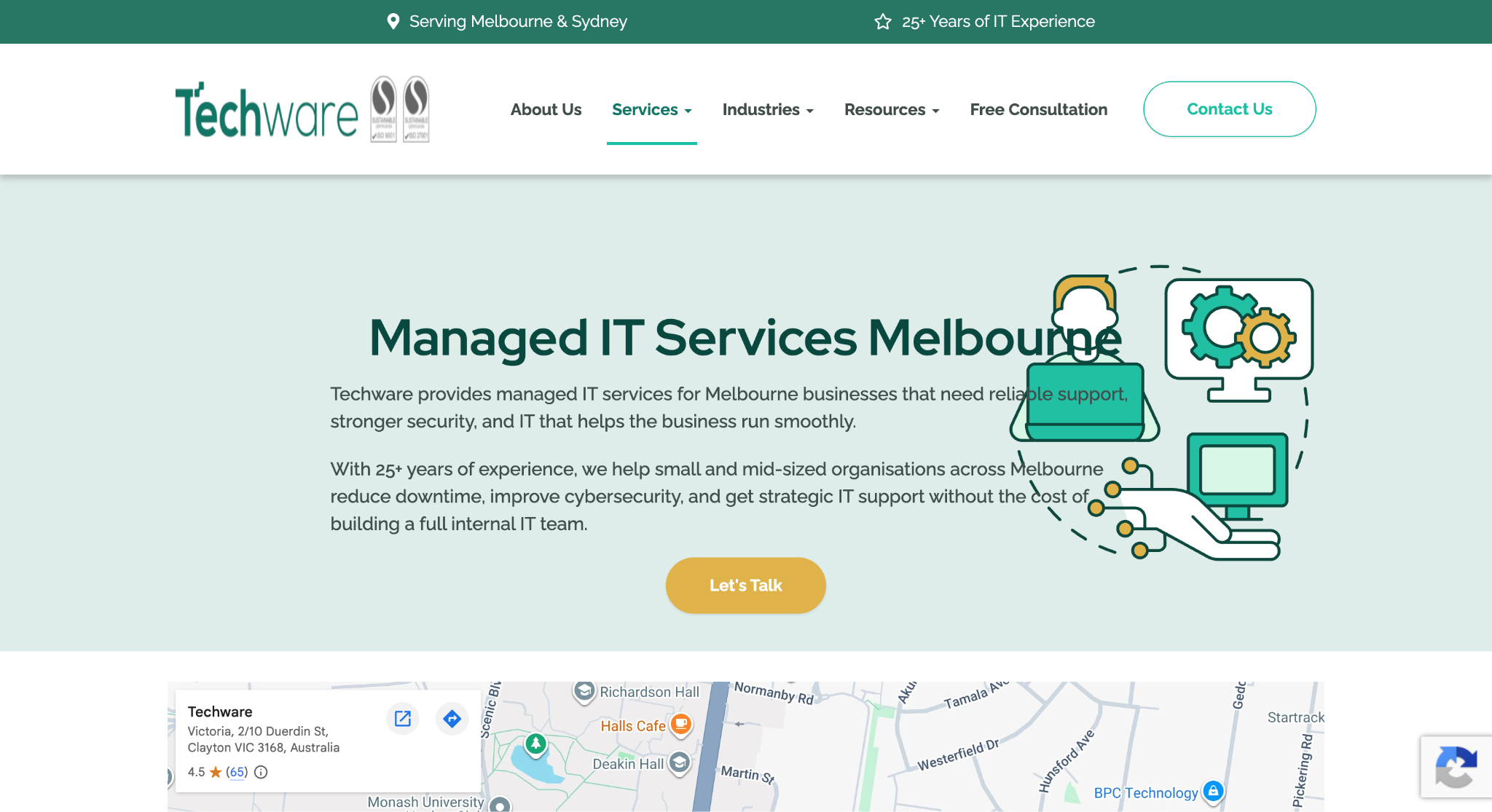
Techware is an Australian IT company with over 25 years of experience delivering managed IT services to small and medium-sized businesses. They cover cybersecurity, cloud solutions, and IT consulting, working as a dedicated outsourced digital operations partner for growing businesses. Their support team operates across Melbourne and Sydney, giving clients a local presence that’s hard to match among providers at this level. For SMBs that need reliable IT without building an in-house team, Techware’s depth of experience makes them a genuinely practical choice.
Where Does Techware Win for Managed IT Providers?
SMBs often struggle to find a provider that treats them as a priority rather than a low-margin afterthought, and Techware’s 25-plus year track record in Australia suggests they’ve built their model around exactly that kind of client. Their responsive support across two major Australian cities means businesses get real coverage, not just a national phone number that routes offshore.
Real-World User Take:
For businesses that want a long-term IT partner rather than a transactional support desk, Techware’s profile checks a lot of the right boxes. Their consistent presence across Melbourne and Sydney, combined with a deep SMB focus, builds the kind of trust that keeps clients renewing. That relationship-first approach is hard to find at this service level.
- Tecala – Best for Mid-Market Managed Services
What Is Tecala’s Main Business?
Tecala is an award-winning Australian IT services provider covering ICT consulting, managed services, cloud services, communications, cybersecurity, and automation. They work with mid-market companies across Australia, running a 100% Australia-based Service Operations Centre that handles everything from network management and infrastructure to disaster recovery as a service (DRaaS). Their recognition as a top-50 global MSP (Channel Futures MSP 501) and two-time No.1 MSP for Mid-Market gives them serious credibility in the Australian market. Clients like Opera Australia and Coates have trusted them with real operational needs.
Where Does Tecala Win for Managed IT Providers?
Mid-market businesses often get stuck between enterprise-priced providers and MSPs that are too small to scale with them. Tecala sits squarely in that gap with a service model built for exactly that tier. Their 100% Australian operations mean clients get genuine local support, not offshore help dressed up as local.
Real-World User Take:
Tecala’s above-average NPS scores aren’t just a marketing claim, they reflect real satisfaction from clients who stay long-term. The Great Place To Work recognition for 2024-2025 is a nice indicator too (happy teams tend to produce better support). That combination of staff culture and client outcomes is genuinely impressive for a mid-market MSP.
- Powernet – Best for Commercial IT Managed Services and Communications
What Is Powernet’s Main Business?
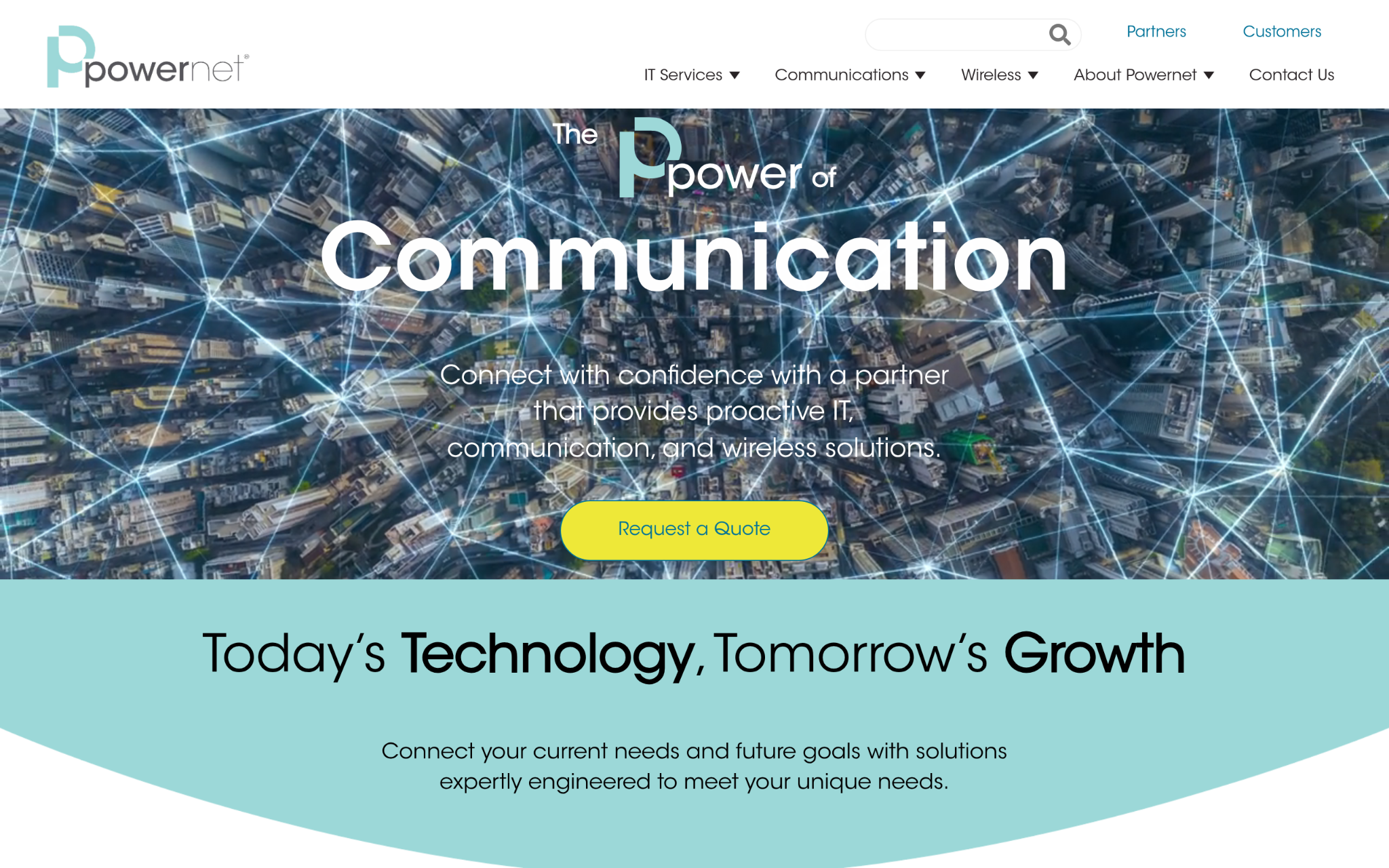
Powernet is a woman-owned IT services provider based in the United States, established in 1992, delivering voice, data, Wi-Fi, and managed services to commercial customers. They’ve evolved from a communications-focused provider into a full-service IT company covering cybersecurity, virtualisation, IP security systems, and backup and disaster recovery. Their WBENC certification and placement at #357 on CRN’s 2025 Solution Provider 500 list point to a company that has built real credibility across more than two decades of operation. Call centre solutions and wireless networking are particular strengths.
Where Does Powernet Win for Managed IT Providers?
Businesses that need both IT infrastructure and communications handled under one roof often end up juggling multiple vendors, and Powernet’s integrated model directly solves that problem. Their consistent community service track record (ten Pillar Awards) suggests an organisation that takes long-term accountability seriously, not just short-term contracts.
Real-World User Take:
Powernet’s longevity says a lot. Staying in this market for over 25 years without dropping off industry recognition lists isn’t easy. Their clients clearly value the one-stop-shop approach, particularly for commercial environments where voice and data need to work together reliably without separate support queues.
- Accel IT – Best for SME IT Support and Managed Services
What Is Accel IT’s Main Business?
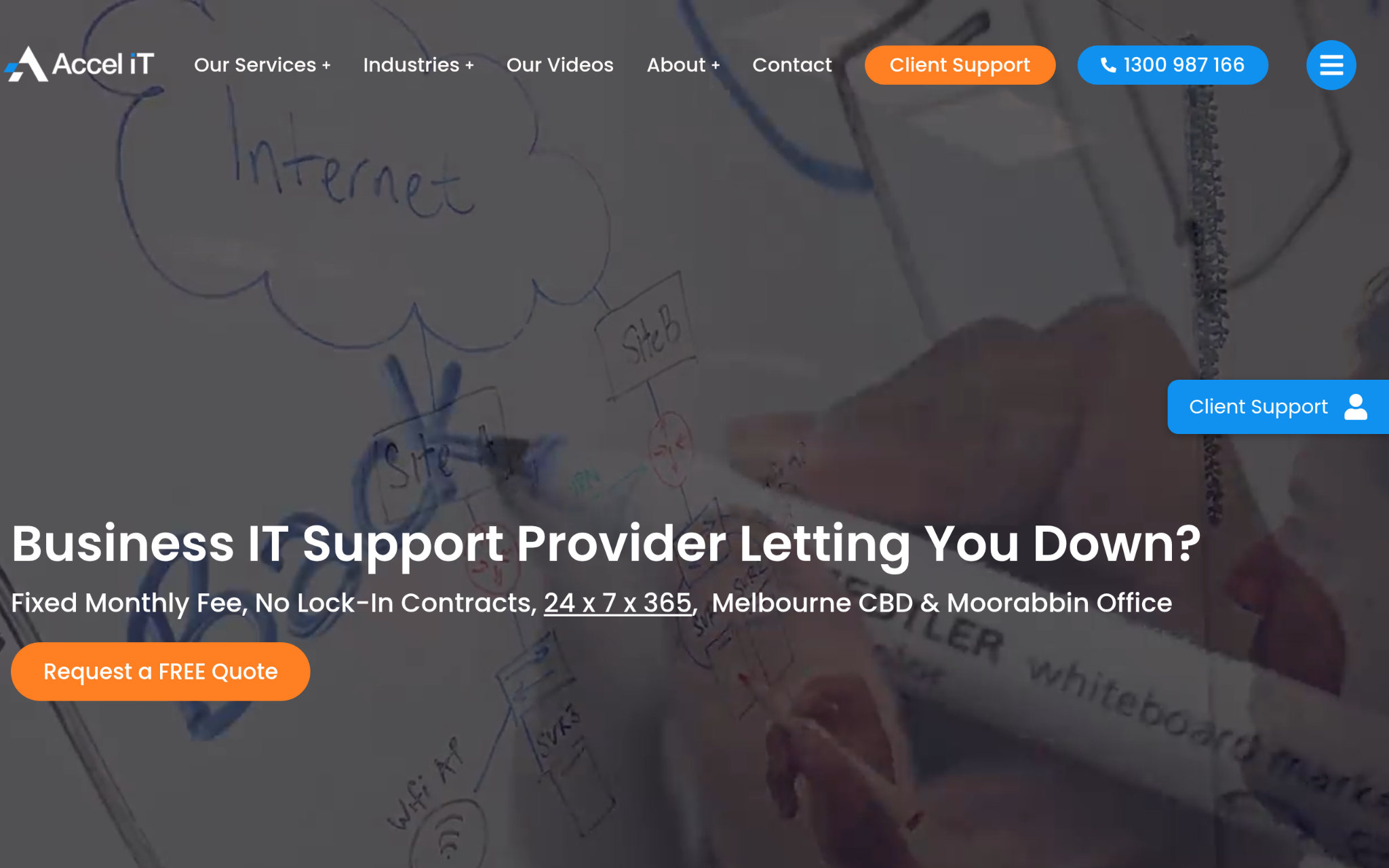
Accel IT is a Melbourne-based IT consulting firm serving SMEs across Australia since 2000. They provide 24/7 onsite and remote support across IT support, managed IT services, cloud deployment, disaster recovery, and cybersecurity. What sets them apart is their vendor-independent model (they don’t take vendor commissions, so recommendations actually reflect client needs) and their fixed monthly pricing with no lock-in contracts. For small businesses tired of being upsold on services they don’t need, that pricing transparency is a real differentiator.
Where Does Accel IT Win for Managed IT Providers?
Small businesses frequently face the problem of paying for bundled services that include things they’ll never use, and Accel IT’s fixed-price, no-lock-in structure addresses that directly by keeping costs predictable. Their proactive monitoring approach means issues are caught before they generate tickets, which matters a lot for businesses without dedicated internal IT staff.
Real-World User Take:
Clients in real estate, retail, and accounting have flagged satisfaction with Accel IT’s straightforward approach. The vendor-independent model genuinely builds trust because clients feel like the recommendations are honest rather than margin-driven. That kind of transparency is difficult to find at the SME end of the market.
- Truis – Best for Enterprise IT Infrastructure and Managed Services
What Is Truis’s Main Business?
Truis is a Queensland-based IT services provider with over 40 years of history, originally founded as Computer Merchants in 1984. They cover servers, storage, cloud computing, networking, and managed IT support, working across platforms including IBM Power, IBM Storage, Lenovo, VMware, Cisco, and Dell. Their ISO 27001 and ISO 9001 certifications, combined with their status as a Cisco partner, give them a solid foundation for enterprise-level work. Real-world deployments include rolling out a contemporary POS system across 188 Best & Less stores and helping Your Aged Care At Home transition to secure remote-friendly IT.
Where Does Truis Win for Managed IT Providers?
Enterprise clients need a provider that can manage complex, multi-platform environments without dropping the ball on any vendor relationship, and Truis’s broad certification stack and 40-year track record make them a genuinely credible option. Their work with major Australian retailers and care organisations shows they can handle high-stakes, large-scale IT without theory, just execution.
Real-World User Take:
Clients consistently note the technical depth combined with approachable, attentive support staff. That balance is rarer than it sounds in enterprise IT. The Best & Less deployment across 188 stores is the kind of proof point that builds long-term confidence, and that scale is hard to match among Australian MSPs.
- Emerging IT – Best for Small to Mid-Sized Business IT Management and Cloud Solutions
What Is Emerging IT’s Main Business?
Emerging IT is an Australian MSP supporting over 280 small and mid-sized organisations across managed IT services, cybersecurity, cloud computing, disaster recovery, and business continuity. Operating since 2001 with a team of 35-plus IT professionals and national coverage across Sydney and Melbourne, they provide advisory, infrastructure delivery, 24/7 support, and ongoing technology management. Their no-lock-in contract model is consistent across the board, and their 8.8 out of 10 satisfaction rating in independent surveys backs up what the awards suggest. They won the inaugural Kaseya MSP of the Year in 2009 and received MSP Select Australia recognition in 2025.
Where Does Emerging IT Win for Managed IT Providers?
Businesses that have been burned by rigid multi-year contracts will find Emerging IT’s flexible model a genuine relief, because it shifts accountability back to the provider to keep earning the relationship. Their 20-plus year track record with consistent satisfaction scores suggests that flexibility hasn’t come at the cost of quality.
Real-World User Take:
An 8.8 out of 10 satisfaction rating across independent surveys is the kind of number that’s hard to fake. Clients value the long-term, relationship-focused approach rather than the transactional feel many MSPs default to. The back-to-back industry award recognition across 16 years only adds weight to what client feedback is already saying.
- VITG – Best for Systems Integration
What Is VITG’s Main Business?
VITG is a US-based IT services company founded in 2015, specialising in systems integration and data analytics engineering. Their service areas cover Design Thinking and UX, Cloud Services, DevSecOps, Operational Intelligence, AIOps, and Data Ops. As an SBA 8(a) Certified and HUBZone Certified Small Minority and Disadvantaged Business, they focus on infrastructure visualisation and helping organisations modernise their technology environments. For businesses dealing with legacy systems that need a structured path forward, VITG’s approach to mapping infrastructure before modernising it is notably practical.
Where Does VITG Win for Managed IT Providers?
Organisations that need to understand their current IT environment before committing to a change path often lack the specialist knowledge to do that mapping work well, and VITG’s infrastructure visualisation focus directly fills that gap. Their DevSecOps and AIOps capabilities point to a team that’s thinking about security and operations together, not as separate concerns.
Real-World User Take:
VITG is a younger firm relative to others on this list (smaller and more focused than a full-scale MSP), but their specialist positioning in AIOps and Data Ops gives them a clear angle. Their certifications and technical focus suggest a team that’s built for complex modernisation work rather than general break-fix support.
How the Top Contenders Were Selected
Data Collection Method
Building the longlist started with sourcing provider names from multiple directions at once. IT services directories, managed service provider rankings, industry publications, and review platforms all contributed to an initial pool of candidates. Case studies published on provider websites were also reviewed early in the process to get a sense of the kinds of clients and problems each company actually works with. The goal was breadth first, filtering second, so no credible option was ruled out before the data was examined.
Filtering for Fit
Once the longlist was assembled, providers without verifiable track records in managed IT services were removed. Verification meant checking whether review patterns were consistent across multiple platforms, not just strong on one channel. Outlier reviews, unusually thin review histories, and companies where service descriptions lacked specificity were all flagged. What remained was a group of providers with enough public evidence to evaluate meaningfully.
Substantiating the Recommendations
Every shortlisted provider’s website claims were then checked against available client feedback and published results. When a company claimed fastest response times or highest resolution rates, those claims were tested against client testimonials, case study outcomes, and where available, independent survey data. Providers whose public-facing claims and real-world client experiences aligned closely were rated more highly than those where a gap existed between marketing language and client sentiment.
Awards, Mentions, and Industry Voice
Industry recognition was treated as a supporting signal, not a deciding one. Placement on lists like Channel Futures MSP 501, CRN’s Solution Provider 500, and recognition programmes like Kaseya MSP of the Year were noted where relevant. Company mentions in trade publications and original research outputs also factored in. The reasoning here is that consistent recognition across multiple independent sources is harder to manufacture than a single award, so patterns of recognition carried more weight than any individual accolade.
Evidence That Matters for Managed IT Providers
The final check focused on whether each provider had dedicated, detailed service pages covering their main IT offerings, verified client reviews from named organisations or recognisable sectors, and case studies showing concrete outcomes. Providers that could show actual results, like a retail chain POS deployment or a care organisation’s move to secure remote work, ranked more credibly than those relying on general capability statements. That practical evidence is what separates providers worth recommending from those that simply describe what they intend to do.
Decision Factors When Picking Managed IT Providers
Choosing a managed IT provider involves more than comparing a features list. The right decision comes down to fit, and fit looks different depending on your business size, sector, and internal IT capacity.
- Industry/Domain Experience: Look for providers with verifiable work in your sector. A firm that has supported healthcare organisations or large retailers has dealt with the compliance demands and operational pressures your business actually faces.
- Features and Services: Check whether the main services (cybersecurity, cloud, disaster recovery, 24/7 support) are bundled clearly or priced in ways that make comparison difficult. Vague tier definitions are usually a sign that pricing flexibility isn’t in your favour.
- Pricing Structure: Fixed monthly pricing with no lock-in contracts offers predictable costs. Long-term contracts with variable rates can create budget surprises when you least want them.
- Results Measurement: Ask how a provider tracks and reports on response time, system reliability, and first-call resolution rate. Providers that measure these things proactively are more accountable than those that wait for you to raise concerns.
- Industry Knowledge and Compliance: For businesses in regulated sectors, confirm that a provider understands relevant IT governance frameworks such as ISO 27001, NIST CSF, or SOC 2, before the contract is signed rather than after.
The Takeaway
The best managed IT providers don’t just keep the lights on. They reduce incident volume, shorten response times, and give businesses the security coverage needed to operate with confidence. The right fit depends on your size, sector, and how much internal IT capacity you already have. As Australian businesses continue building out their cloud and cybersecurity posture, having a provider that grows with you rather than just supports where you are today is the distinction that will matter most.