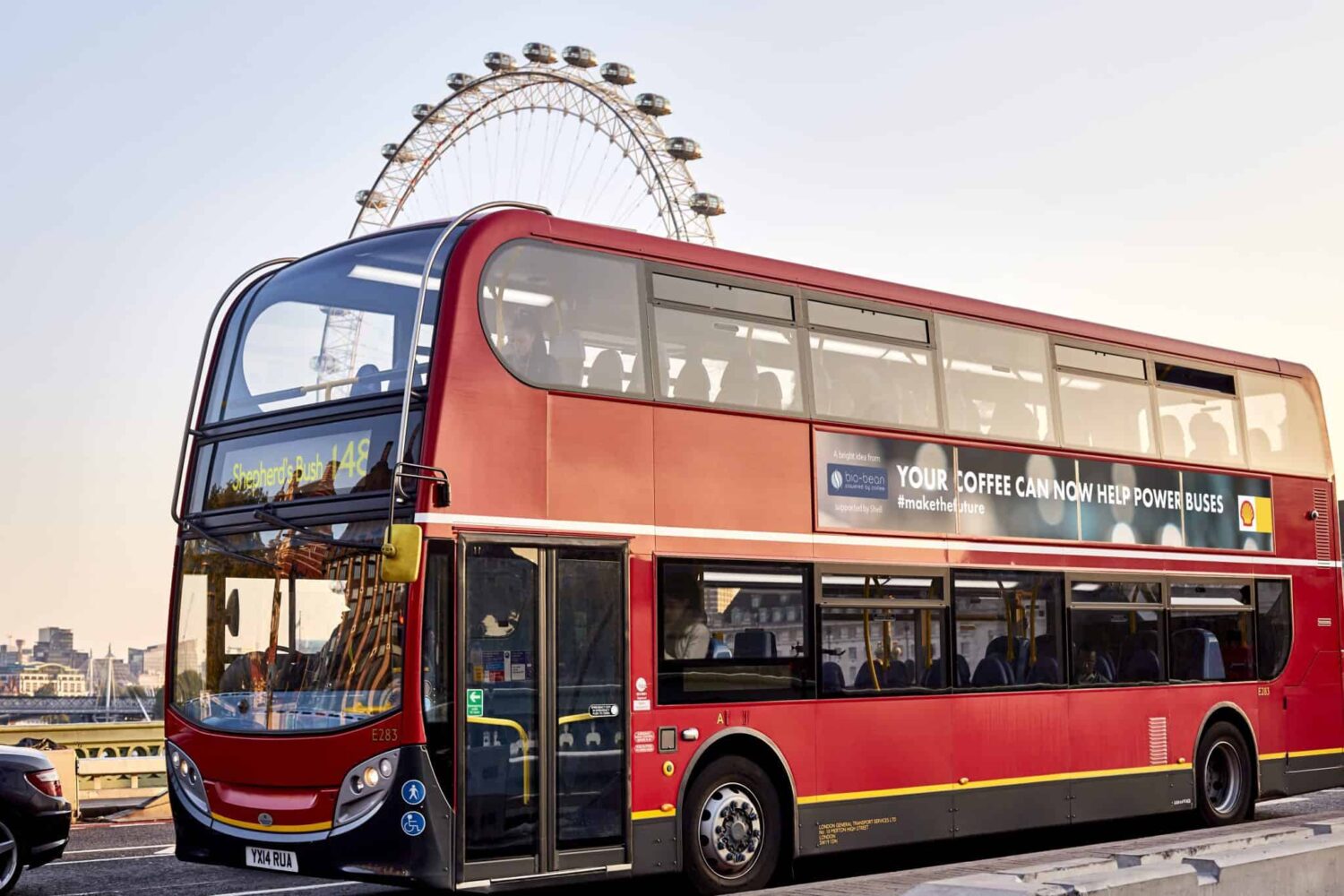
Shell and bio-bean announce that together they are helping to power some of London’s buses using a biofuel made partly from waste coffee grounds.
The B20 biofuel contains a 20% bio-component which contains part coffee oil. The biofuel is being added to the London bus fuel supply chain and will help to power some of the buses; without need for modification.
The average Londoner drinks 2.3 cups of coffee a day which produces over 200,000 tonnes of waste a year, much of which would otherwise end in a landfill with the potential to emit 126million kg of CO2 . bio-bean works to collect some of these waste coffee grounds from high street chains and factories.
This latest collaboration is part of Shell’s #makethefuture energy relay, which supports entrepreneurs turning bright energy innovations into a positive impact for communities around the world.
Sinead Lynch, Shell UK Country Chair, said: “When it comes to clean energy, we are always looking for the next inventive solution. A good idea can come from anywhere, but with the scale and commitment of Shell, we can help enable true progress. We’re pleased to be able to support bio-bean to trial this innovative new energy solution which can help to power buses, keeping Londoners moving around the city – powered in part by their waste coffee grounds.”
bio-bean founder Arthur Kay won Shell LiveWIRE’s Innovation Award in 2013 and the Mayor’s Entrepreneur Programme in 2012 with his ideas about turning coffee waste into fuel. bio-bean has since gone on to produce bio-mass pellets and briquettes called Coffee Logs, before this latest biofuel innovation