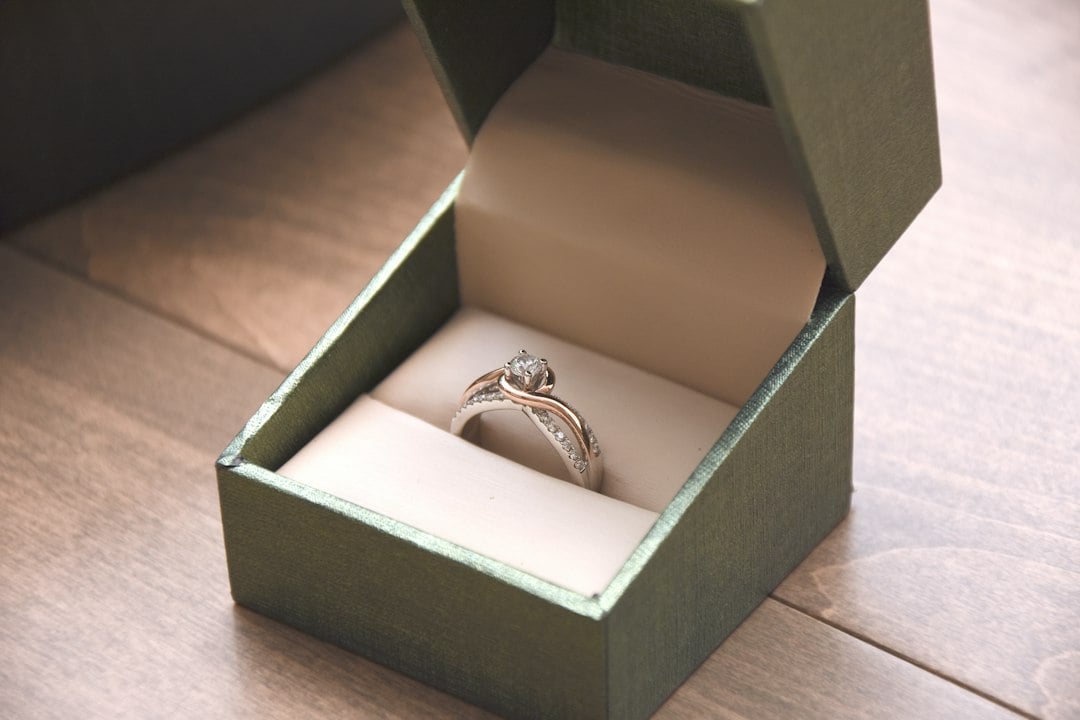
There is a particular look on a jeweller’s face when someone walks in with a ring they bought two years ago and have worn every day since, at the beach, in the surf, through the garden, in and out of the sunscreen.
It is not disapproval. It is recognition. Because almost every problem on that ring is predictable, and almost all of it was decided at the point of purchase by someone who was thinking about how the ring looked in a display case rather than how it would live on a hand in a coastal climate.
Australians who live near the water wear jewellery harder than they realise. Salt, sand, sunscreen, chlorine and heat are all working on a ring constantly. None of that means you cannot have something beautiful. It means the choices that matter are slightly different from the ones the buying guides emphasise.
What actually damages a ring near the coast
Four things, and they do different jobs.
Salt water is corrosive to metals over time and particularly unkind to the solder joints where a setting meets a band. It also carries fine abrasive particles that work into the gaps around stones.
Sand is the most underestimated hazard of the lot. Sand is quartz, and quartz is hard enough to scratch gold, platinum and most coloured gemstones. A ring worn on a beach is being lightly sandblasted. Diamonds survive this. The metal around them does not.
Sunscreen, sand and moisturiser build up under a stone and around claws. This does not damage anything but it kills brilliance completely. A diamond that looks dull is nine times out of ten a diamond with a film of sunscreen on the underside of the pavilion, where light is supposed to enter and exit.
Temperature and water combined cause fingers to swell and shrink noticeably. A ring that fits in an air conditioned showroom in July is a different fit on a humid afternoon in February, and rings come off in the water because of it.
The settings that survive
Setting choice matters more than stone choice for anyone who lives an outdoor life.
Bezel settings surround the stone with a continuous rim of metal. They are the most secure option available and they are the correct answer for anyone who swims regularly, surfs, gardens, rock climbs or works with their hands. Nothing catches, nothing snags on a wetsuit, and there are no claws to bend. The old objection was that bezels hide too much of the stone and dull the sparkle. Modern low-profile bezels with an open gallery underneath have largely solved that.
Low-profile solitaires sit the stone close to the finger rather than raised on a tall basket. A high-set stone is beautiful and it is also a lever, catching on things and taking impact directly. Lowering the setting dramatically reduces knocks.
Channel and flush settings, where small stones sit level with the surface of the band, are excellent for the same reason. Nothing protrudes.
Six claws beat four. If you want a claw setting, six claws give redundancy. A four-claw setting that loses one claw has lost a quarter of its grip.
The settings to think twice about
Not to avoid entirely, but to go into with clear eyes.
Micro-pave bands, with dozens of tiny diamonds set along the shoulders, are genuinely beautiful and genuinely high maintenance. Each of those small stones is held by minute beads of metal. Sand and daily knocks loosen them, and they are the most common thing to lose. If you love the look, plan on checking the ring regularly and accept that replacements happen.
Tall cathedral settings put the stone up where it looks magnificent and where it catches on everything.
Full eternity bands cannot be resized. Fingers change over decades, and a ring you cannot resize is a ring you may eventually not be able to wear.
Softer coloured stones. Emerald, opal and tanzanite are beautiful and comparatively fragile. Emeralds in particular are typically oil-treated and that treatment degrades. Sapphire and ruby are far more robust and come in a wide colour range, including some superb Australian sapphires.
Metal choice for a salt climate
Platinum is the best performer near the water. It is dense, it is naturally white so it never needs replating, and when it scratches the metal displaces rather than wearing away, meaning you lose almost nothing over decades. It costs more and it is heavier, which some people love and others do not.
Eighteen carat gold is 75 per cent pure and holds detail well. Yellow and rose gold are straightforward. White gold is yellow gold alloyed and then rhodium plated, and that plating wears off over a few years, faster in salt and sand, revealing a warmer tone underneath. Replating is inexpensive and routine, but it is a recurring appointment nobody mentions at the point of sale.
Nine carat gold is 37.5 per cent gold and harder, which sounds like an advantage and mostly is not. It is more brittle at solder joints and more prone to reacting with salt over time.
Silver is not suitable for an engagement ring in a coastal environment. It tarnishes constantly and is too soft to hold stones securely.
The stone question in 2026
Two market changes are worth knowing before you spend anything, because they have moved the goalposts considerably.
Laboratory-grown diamond prices have collapsed. Manufacturing capacity expanded enormously, average prices fell 20 to 30 per cent against 2024 alone, and some categories are down more than 90 per cent from their peak. Lab-grown stones above one carat now commonly sell at 5 to 10 per cent of a natural equivalent.
And in late 2025 the Gemological Institute of America stopped grading lab-grown diamonds on the D to Z colour scale and the flawless to included clarity scale it uses for natural stones. Lab-grown stones now get one of two descriptive categories, premium or standard. The world’s most respected laboratory has formally decided the two products should not share a vocabulary.
For a coastal buyer there is a practical angle here. If you genuinely wear your ring in the surf every weekend, and the prospect of damage keeps you from enjoying it, a lab-grown centre stone removes most of that anxiety for a fraction of the cost. You are buying something to wear rather than something to hold value. That is an entirely legitimate decision, provided nobody has implied otherwise.
If you want the stone to retain value, natural is the answer and you should insist on an independent GIA or AGS report.
Cut matters more than size always
Of the four Cs, cut is the one that determines how a ring actually performs and the one discussed least.
Cut is not the shape. It is the accuracy of the proportions, the symmetry and the polish, and it decides whether light entering the stone returns through the top or leaks out the bottom. An excellently cut stone with ordinary colour will out-sparkle a poorly cut stone with perfect colour in every light, to every observer, permanently.
This matters even more in bright coastal light, where a well cut stone comes alive and a poorly cut one looks flat and glassy.
The corollary is that carat is over-weighted. Prices leap at the round numbers because demand clusters there. A 0.90 carat stone costs noticeably less than a 1.00 carat and the difference is invisible on a hand. Colour past about G or H is undetectable without a comparison stone. Clarity only needs to be eye-clean.
Prioritise cut, sit just under the carat thresholds, accept G or H and an eye-clean grade, and put everything you save into the quality of the cutting.
Australia’s own stone
Worth knowing if you are considering colour. The Argyle mine in Western Australia’s East Kimberley produced more than 90 per cent of the world’s pink diamonds before closing permanently in November 2020. Rio Tinto’s final tender of remaining inventory concluded in October 2025, which makes 2026 the first year in which every Argyle pink changing hands anywhere comes from the secondary market.
Supply is now fixed and can only shrink. Documented appreciation has run at roughly 8 to 12 per cent a year since closure, and stones with Argyle provenance carry a 20 to 50 per cent premium over comparable pinks from other origins.
If you go down this road the paperwork is the asset: laser inscription, Argyle certificate and lot number, ideally alongside a GIA coloured diamond report confirming natural colour origin. Treated and laboratory-grown pinks look similar and hold no value.
Practical care that actually works
Take it off for the ocean. Cold water shrinks fingers and rings come off without anyone noticing. If you will not take it off, a bezel setting and a slightly snugger fit are your insurance.
Clean it properly and often. Warm water, a drop of dishwashing liquid and a soft toothbrush, paying attention to the underside of the stone. This single habit does more for how a ring looks than any grade on a certificate.
Avoid chlorine. Pool chemicals attack the alloys in gold over time, particularly at solder joints.
Have the claws checked once a year. A claw retipped at a routine check costs very little. A stone lost because nobody looked costs the stone, and manufacturing warranties rarely cover loss.
Rinse after the beach, every time. Salt left to dry in the gaps around a setting does slow damage.
Sizing in a warm climate
Finger size is not a fixed number, and it moves more in a humid coastal climate than anywhere else in the country.
Fingers are measurably larger late in the day, larger in heat, larger after exercise and after salt, and smaller in cold water and in air conditioning. The swing across a single day can be most of a full ring size, which is why rings that fit perfectly in a showroom come off in the surf and stick in February.
Two practical rules. Size in the afternoon rather than first thing, because a ring that fits at your largest will be loose but wearable at your smallest, while the reverse gets stuck. And if the wearer has prominent knuckles, the ring has to pass the knuckle and then sit on a narrower finger, which means either accepting some movement or having sizing beads fitted inside the band to hold it steady.
Ask what the resizing allowance is before you buy. Most plain and solitaire bands resize easily in either direction. Pave shoulders resize in a limited range. Full eternity bands generally cannot be resized at all, which over a thirty year marriage is a real constraint rather than a technicality.
Buying it
Australia’s market splits into chains, online sellers and independent studios that make to order. The third group is frequently better value than assumed, because you pay for the stone you chose and the metal used rather than financing a case of unsold stock, and because a maker can build a ring around how you actually live rather than what happened to be in the window.
That last point is the real argument for going bespoke in a coastal climate. Telling a jeweller that you surf three times a week changes the setting, the profile, the metal and the claw count, and no off-the-shelf ring has been designed with that in mind.
Perth’s studios are a useful comparison, being a coastal city with the same conditions and a concentration of workshops making rather than retailing. Looking through the engagement rings Perth couples commission from a maker like Stelios Jewellers shows how much low-profile and bezel work is being specified now, which tells you something about what people actually want to wear rather than what photographs well.
The summary
Choose the setting for your life, not for the display case. Bezel and low-profile settings survive a coastal lifestyle and tall claw settings take a beating. Platinum outperforms near salt, and white gold will need replating.
Spend your money on cut rather than size. Insist on independent certification and ask directly whether a stone is natural or laboratory-grown, because the grading language changed in late 2025.
And clean the thing. Most dull diamonds are not poor diamonds, they are diamonds with sunscreen underneath them.
This article is general information only and does not constitute financial or investment advice. Diamond prices and grading standards change. Confirm current specifications and certification with your jeweller.